Paradoxical Hypertrichosis: More Hair Growth After Laser?
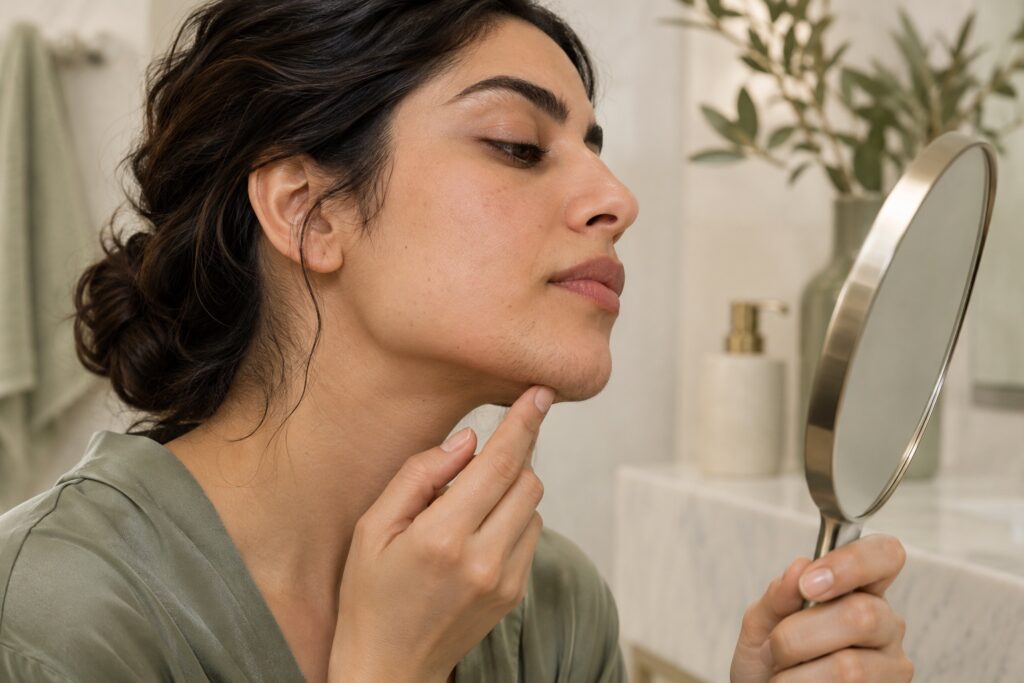
You booked laser hair removal to have less hair. Seeing darker or thicker growth instead can be upsetting, especially when you expected each session to reduce it. There is a recognized complication called paradoxical hypertrichosis, but ordinary regrowth can look worrying too.
Here is how to describe the change, what the research says about facial and IPL treatments, and what to bring to a review before deciding what comes next.
Editorial details
How do you know if it is paradoxical hypertrichosis?
The important change is more or coarser hair than you had before treatment. A single close-up taken under brighter lighting cannot establish that. Compare the same area over time, including its edges, with photos taken before the first session if you have them.
Hair still visible after treatment
Treated hairs do not disappear immediately. They can remain visible while shedding. See our laser shedding timeline for that early stage.
Hair returning between visits
Regrowth and maintenance needs can occur after laser. Hair coming back does not, by itself, show that treatment created extra growth.
More growth than before
A spreading area of darker, coarser or denser hair deserves review, particularly where the starting hair was sparse or fine.
These are clues, not a home diagnostic test. A provider should compare the pattern with your baseline and consider other reasons for a change. The AAD explains that regrowth and maintenance can be part of laser treatment; unexpected increased growth is a different concern.
Record when you noticed the difference and whether it is inside the treated area, around its border or elsewhere. Also record the time since shaving. Short, blunt hairs can feel thicker without a change in their growth rate or actual thickness. Mayo Clinic explains why shaving changes the feel of stubble.
Bring clearer questions, not just another appointment.
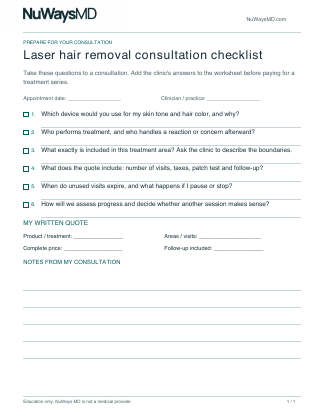
Use our laser consultation checklist to organize questions about the device, treatment area, expected response and next steps. Bring your photos and session history alongside it.
Email me the laser checklist →
Free checklist and printable resource. Newsletter signup is optional.
How common is paradoxical hypertrichosis?
There is no single percentage that describes every treatment area and patient. The two studies below answer different questions. Their figures should not be treated as your personal odds or as evidence that the risk has risen over time.
2021 systematic review
Across 22 studies and 9,733 patients, the pooled estimate was 3%, with a 95% confidence interval of 1% to 6%. Results differed greatly between studies. Outside the face and neck, the reported rate was 0.08%.
Read the review. Most included studies were observational; the pooled number is not a facial-treatment rate.
2025 prospective facial study
A hospital study of Jordanian women receiving long-pulse alexandrite facial treatment reported 16.2%. It found associations with PCOS, irregular periods, family history of hirsutism and some skin phototypes.
Read the study abstract. One population, one setting and one treatment type cannot establish a rate for all laser or home IPL users.
For your consultation, the useful question is: “What makes my hair and treatment area a reasonable target, and how will you recognize an unwanted change?” A generic percentage cannot replace that discussion.
Why are the face and neck a particular concern?
The face and neck have the clearest location-related signal in the systematic review. Facial treatment also requires deciding which hairs to target. Coarse, pigmented hairs and a broad area of fine fuzz are different starting points.
One proposed explanation is that heat insufficient to disable a follicle stimulates growth instead. The exact mechanism remains uncertain. This is not an instruction to turn the energy up: inappropriate settings can cause burns or pigment changes. Review of proposed mechanisms; AAD laser safety guidance.
Ask the provider to identify the hairs they intend to treat and explain why surrounding fine hair is included or excluded. Our facial laser hair removal guide covers upper-lip, chin and full-face planning in more detail.
Darker skin does not automatically rule out professional laser. It makes device selection, settings and experience with your skin important. The 2021 review could not establish the relationship with skin type from its available data, while the later facial study found associations in its own population. Neither supports a universal skin-tone risk calculator.
Tell the provider about irregular periods, a diagnosis of PCOS, medication changes or increased hair outside the treated area. Hormonal hair growth and treatment-associated growth can be difficult to separate from photographs alone. Rapid new facial hair, particularly with other hormonal changes, deserves medical assessment rather than only a device discussion. Mayo Clinic on evaluating hirsutism.
Can at-home IPL cause paradoxical hair growth?
IPL is included in the evidence on paradoxical hypertrichosis, but those studies do not give a dependable rate for each home device. The systematic review did not find treatment modality explained the rate. That does not establish that every brand, setting or home-use pattern is equally safe.
Do not assume lower power eliminates the concern, or that more frequent flashes will correct a disappointing result. Follow the exact device’s skin-tone, hair-color and body-area restrictions. Facial permission may be narrower than “safe for the face,” so check the instructions for your model rather than another device from the same brand.
If you notice increasing facial hair during home use, pause treatment of that area and arrange an assessment before experimenting with higher settings or more sessions. Bring the device name, instructions and the schedule you actually followed. Our at-home IPL versus professional laser comparison explains the differences in equipment and suitability.
Does it go away, and how is it treated?
Improvement is possible, but there is no reliable promise that it will disappear on its own or after a fixed number of sessions. The first decision is whether the change really represents paradoxical growth and whether the existing plan still makes sense.
In the systematic review, three of four studies reporting continued treatment described gradual improvement. That is a count of studies, not a 75% patient success rate. It supports discussing carefully reassessed treatment; it does not mean everyone should continue unchanged.
Electrolysis is another option to discuss, especially for a limited area or hairs that are poor light-treatment targets. It treats individual follicles and requires time and skilled technique. It is not a risk-free shortcut. Compare the practical differences in our electrolysis versus laser guide. Mayo Clinic describes both approaches and their trade-offs.
Between appointments, ask which temporary removal method fits the planned assessment. Shaving does not make the hair grow thicker, but waxing or plucking can make it harder to show the untreated pattern at your visit. Agree on how long to leave the area visible for examination rather than enduring unwanted hair indefinitely.
What should you bring to a treatment review?
Bring evidence of the change and the treatment history. You do not need to arrive with a diagnosis. A simple record helps the provider distinguish an inadequate response, hormonal change and possible treatment-associated growth.
- Comparable photographs: before treatment and now, without filters, in similar lighting and at a similar interval after shaving. Include the treatment borders.
- Your timeline: session dates, when shedding occurred, when increased growth became noticeable and whether it is progressing.
- Treatment details: device or home model, areas treated, settings if available and any changes between sessions. Ask the practice for its records.
- Relevant health details: medications, hormonal symptoms and other hair changes. Mention any burns or persistent reactions.
- The decision you need: whether to pause, revise the plan or consider an alternative, plus when and how improvement will be measured.
Before paying for more sessions, ask what would change, why that change is appropriate and what would make the provider stop or refer you. If the explanation does not address your documented concern, an independent dermatology opinion is reasonable.
Frequently asked questions
Can paradoxical hypertrichosis happen after one session?
Do not diagnose it from one patch of stubble after a visit. The concern is a documented increase compared with baseline; a provider should review the timing, hair pattern and other causes rather than use a fixed session count.
Is paradoxical hypertrichosis permanent?
Not necessarily, but spontaneous disappearance cannot be promised. Published reports include improvement with further treatment, and the right next step depends on an assessment of the changed hair and previous treatment.
Does shaving make it worse?
Shaving does not increase hair thickness, color or growth rate. The blunt cut end can feel coarse, so compare photographs at similar intervals after shaving. Mayo Clinic.
Can a patch test guarantee it will not happen?
No. A test area can help a provider assess the skin’s response, but it cannot guarantee that unwanted hair growth will never occur later. Ask about follow-up as well as the immediate test reaction.
Sources and editorial notes
Sources checked November 5, 2026. Clinical review pending. This is consumer education, not a diagnosis or a treatment prescription. Study populations differ, and reported rates should not be combined into a personal risk score. The cover is an editorial illustration, not a patient result.
View all 6 sources
- Snast and colleagues, 2021 systematic review: 22 studies, pooled prevalence, location findings and limited evidence on continued treatment.
- Qeyam and colleagues, 2025 prospective study: facial alexandrite treatment in Jordanian women; observational associations, not proof of causation.
- Desai and colleagues, 2010 review: proposed mechanisms and historical reports; uncertainty remains.
- AAD laser hair removal FAQs: expected response, maintenance and complications.
- Mayo Clinic shaving explanation: why stubble can feel thicker without increased growth.
- Mayo Clinic hirsutism evaluation and treatment: hormonal assessment and hair-removal options.