EQUIPMENT BUYING GUIDE · CYNOSURE LUTRONIC
XERF Skin Tightening Machine: Price, Tips and FDA Clearance
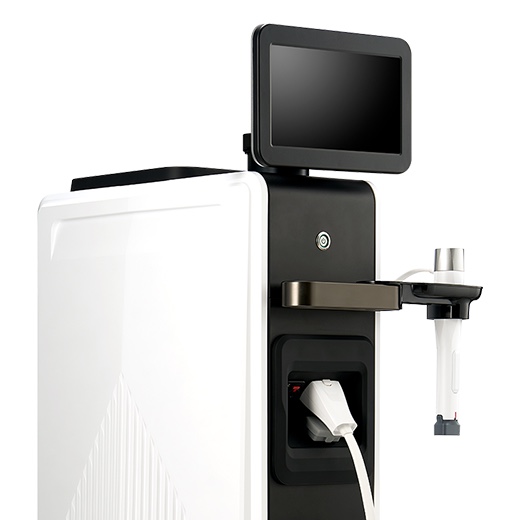
XERF is a monopolar radiofrequency system made by Lutronic and sold in the US by Cynosure Lutronic, cleared by the FDA in August 2025. It pairs 6.78 MHz and 2 MHz energy and uses single-use tips. Cynosure Lutronic doesn’t publish a price, and we found no federal purchase. Here is exactly what the FDA clearance covers, what the early studies show, how XERF compares with Thermage FLX, what patients pay and what to get in writing.
Document-based buying analysis, informed by Darryl’s 9+ years in the industry; no hands-on test of this device. Not sponsored; NuWays MD has no commercial arrangement with Cynosure Lutronic. Disclosures.
OUR TAKE
XERF is a monopolar radiofrequency (RF) system made by Lutronic Corporation in Korea and sold in the US by Cynosure Lutronic, cleared by the FDA on August 11, 2025 (K251327). It combines 6.78 MHz, the frequency Thermage uses, with 2 MHz, which Cynosure Lutronic says reaches deeper layers; the company calls it “the world’s first multifrequency monopolar RF treatment.” It treats through single-use EFFECTOR tips and cools with cryogen, and Cynosure Lutronic markets it as “Never-Numb.” An “XERF 2.0” console was added to the FDA device database in April 2026.
Its FDA clearance covers one use: “dermatologic and general surgical procedures for electrocoagulation and hemostasis.” There is no wrinkle, lift or tightening indication, and the filing included no clinical tests; its predicate was Thermage FLX. Cynosure Lutronic’s US page states the same intended use and says its “skin tightening” wording describes tightening “via soft tissue coagulation.” The company doesn’t publish a price, we found no federal purchase, and patients pay about $1,400 to $1,800 a treatment for a full face or face and neck, depending on the package, at the two practices we checked. See what the clearance covers.
Strengths
- Two frequencies in one shot in its deep mode
- Average pain about 4 of 10 in two company-linked studies with little or no numbing
- Several tip sizes
- Sold and serviced by Cynosure Lutronic in the US
Watch for
- Cleared for electrocoagulation and hemostasis only
- No clinical data in the FDA filing
- One small US study, unblinded, sponsored, 90 days
- “Safe for all skin types” marketing; the US study tested types I to IV
Is XERF FDA cleared for skin tightening?
No: XERF is cleared for electrocoagulation and hemostasis, the general electrosurgical indication, and nothing else. The FDA found it substantially equivalent to Thermage FLX, with Cutera’s truSculpt iD as a reference device. But where Thermage FLX’s clearance goes on to list periorbital wrinkles, wrinkles and, with vibration, cellulite, XERF’s lists only the first, general line. A 510(k) clearance is not an approval.
| Item | From K251327 |
|---|---|
| Indication | ElectrocoagulationDermatologic and general surgical procedures for electrocoagulation and hemostasis |
| Predicate | Thermage FLX (K170758); truSculpt iD (K221407) as a reference |
| Lab testing | Tissue heating in kidney, liver and skin; and dermal temperature at 3 mm compared with Thermage FLX, judged equivalent in heating and cooling over time |
| Clinical testing | “No clinical tests were included as part of this submission.” |
From FDA 510(k) K251327, read November 21, 2026.
Lutronic’s summary says the lab results confirm “a desirable clinical treatment effect, such as tissue repair responses and establishing long-term dermal remodeling.” That is the company’s statement; the clearance includes no clinical-effect finding, and no clinical tests were submitted. Cynosure Lutronic’s US page states the intended use this way: “The XERF RF system is intended for use in dermatologic and general surgical procedures for electrocoagulation and hemostasis. All instances of the term ‘skin tightening’ are used to describe tightening effects that occur via soft tissue coagulation.” Before you advertise XERF as tightening, lifting or wrinkle treatment, ask Cynosure Lutronic in writing what it recommends you say, and have your counsel review the ad.
How much does a XERF machine cost?
PRICE CHECK · NOVEMBER 21, 2026
- New
- Not published by Cynosure Lutronic. Ask whether the quote is for the original XERF or XERF 2.0.
- Government orders
- None found for XERF or Lutronic skin devices on USAspending.
- Per treatment
- At least one single-use EFFECTOR tip; one published protocol used three tip sizes in a session. Tip prices not published.
- What patients pay
- $3,000 for two full-face treatments, then $1,500 each, in Arizona; $1,800 for one face and neck treatment in Oregon.
Like Thermage, XERF uses single-use tips, so the tip price is your consumable cost on every treatment. The FDA device database lists the EFFECTOR 40 (300) and EFFECTOR 60 (600, 900 and 1,200), and the XERF filing lists tip patterns from 9 x 4.5 mm to 27.6 x 17.6 mm. In the US study, every patient was treated with the EFFECTOR 60, and a face and neck treatment used 300 to 677 shots, averaging 569; a 16-patient review in Israel used the EFFECTOR 60 on the lower and middle face and the EFFECTOR 10 and 5 on the upper face, 600 shots in all. Ask Cynosure Lutronic which tip and shot count it recommends for a face and neck, and the price of each.
Practices often sell XERF as a series. Phoenix Skin, in Phoenix and Scottsdale, lists two full-face treatments for $3,000, two face and neck treatments for $3,500 and later treatments at $1,500 or $1,750 each. Neaman Medi Spa in Salem, Oregon, lists one face and neck treatment for $1,800 in a 120-minute appointment, or two for $3,200.
| Quote item | Why it changes the cost | A comparable answer includes |
|---|---|---|
| Console model | XERF and XERF 2.0 are both listed in the FDA device database | Which model, and what 2.0 changes |
| Tips | Every treatment uses one or more new tips | Price per EFFECTOR tip by size and count, and the tips and shots recommended for a face and neck |
| Cooling and accessories | Cryogen and a return pad are part of each treatment | Cryogen supply, return pads and their cost per treatment |
| Training and claims | The clearance is electrocoagulation only | Training, and Cynosure Lutronic’s guidance on marketing wording |
| Service | A new device with a short US service record | Warranty, annual price from year two and loaners |
Before you sign, test the quote against your bookings: the skin tightening machines guide shows how many treatments cover a financing payment at different consumable costs, and our equipment ownership costs guide works through a quiet calendar month.
XERF tips and specifications
XERF runs at two frequencies through one handpiece, with 12 tip types listed in its FDA filing.
| Specification | Value and source |
|---|---|
| Energy | Monopolar RF at 6.78 MHz (up to 400 W, 1 to 250 J) and 2 MHz (up to 300 W, 1 to 120 J) (FDA filing); in its deep mode, 6.78 MHz followed by 2 MHz within one pulse (Erlich 2026) |
| Tips | 12 types; patterns include the 60 tip at 27.6 x 17.6 mm, 40 tip at 17.6 x 17.6 mm, 10 tip at 9 x 9 mm and 05 tip at 9 x 4.5 mm; single-use (FDA filing) |
| Cooling | Cryogen (Cynosure Lutronic); output stops if the tip surface exceeds 43 °C (device description in the Weiss 2026 study) |
| Settings | Three depth settings and ten intensity levels; “Wave Fit” pulse and impedance feedback (Cynosure Lutronic) |
| Console | 389 x 856 x 1,604 mm with its holder; 47 kg; 10.1-inch touchscreen; finger switch or footswitch; 100 to 120 V (FDA filing) |
From FDA 510(k) K251327, the FDA device database, Cynosure Lutronic’s XERF page and the Weiss 2026 study, read November 21, 2026.
MAKE THE QUOTES COMPARABLE
XERF or Thermage? Compare the quotes.
Line up a XERF quote with a Thermage FLX or Sofwave quote: console, cost per treatment, service after year one and financing, side by side.
Free, works in your browser, no account needed.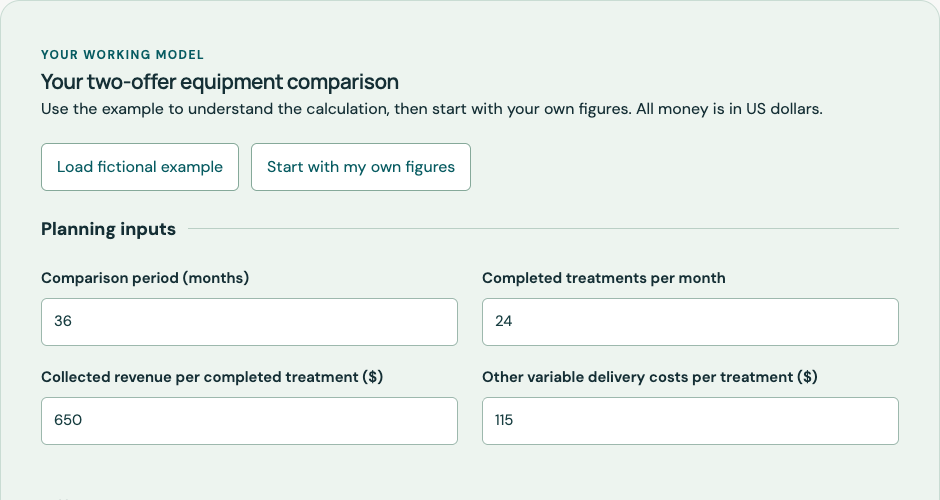
What does the research show for XERF?
The clinical evidence we could read is early: one prospective US study of 39 people, one retrospective review of 16, and company tissue studies. The US study also cites a 2025 Korean clinical study by Hwang in Medical Lasers, which we couldn’t read.
| Study and what it tested | What it found | Read it with |
|---|---|---|
| Weiss and colleagues, 202639 people, 4 US sites, two sessions, face and neck | 92% (36 of 39) improved on the treating doctors’ global rating at 90 days; average pain 4.2 of 10 without anesthesia; no lasting side effects | Unblinded, no control group; skin types I to IV; Cynosure Lutronic supplied devices, tips and a research grant, and supported data management or statistical programming |
| Erlich and colleagues, 202616 women, one session, records review, Israel | Measured lift of the brows and upper eyelids and better skin quality at 1 and 3 months; average pain 4.31 of 10, severe (7 or higher) in 12% | Retrospective; numbing cream on request for 4; the lead author trains for Cynosure Lutronic, which ran the statistics; the authors call it preliminary |
| Ko and colleagues, 2025Computer model and pig skin | 2 MHz heated deeper into fat; 6.78 MHz heated along fibrous bands; both together remodeled collagen and elastin | Animal and model data; three of seven authors from Cynosure Lutronic |
Results as each source reports them. The studies differ in design and outcome, so their figures can’t be compared.
The Weiss study is the one to read before you buy. Its 39 patients were mostly women aged 28 to 70, each treated twice four weeks apart, with no topical anesthetic. The authors themselves call the findings “preliminary and hypothesis-generating” and say a randomized comparison with a standard 6.78 MHz system such as Thermage FLX is needed. They report lower pain than published Thermage studies, but note that comparisons across studies are limited. And while Cynosure Lutronic’s FAQ says histology “confirms the XERF system delivers RF energy to the SMAS,” the US study notes that “tissue-level depth of effect was not directly assessed in humans.”
What risks have XERF studies reported?
We didn’t find XERF’s instructions for use or contraindications posted publicly, so the closest guide is what its two clinical studies excluded and reported. Treat these as study criteria, not labeling.
- Excluded in the 39-person US study: pregnancy, breastfeeding or planned pregnancy; an implanted pacemaker or similar electrical device; metal implants that could interfere with the energy; permanent fillers or facial implants; infected tissue in the area; recent procedures there; and smoking in the past month.
- Treated as contraindications in the 16-patient review: implanted electronic devices such as pacemakers or defibrillators, active skin infection or inflammatory skin disease in the area, pregnancy or breastfeeding, uncontrolled systemic disease and active cancer in the area.
- Side effects reported: the US study reported no long-lasting adverse events, only mild, transient redness and swelling that resolved without treatment; the review reported redness lasting a day or two in 3 patients, one with mild swelling, and no burns or fat loss.
- Eyes: the review treated the upper face only outside the orbital rim; XERF’s clearance has no eyelid wording.
Ask Cynosure Lutronic for the full instructions for use and contraindications in writing, and build your consent form from them with your medical director.
XERF vs. Thermage FLX: what’s the difference?
XERF was cleared by comparison with Thermage FLX; they differ in frequency, FDA wording and published evidence.
| Item | XERF | Thermage FLX |
|---|---|---|
| Maker | Lutronic, sold by Cynosure Lutronic | Solta Medical |
| Frequency | 6.78 and 2 MHz | 6.78 MHz |
| FDA wording | Electrocoagulation and hemostasis only | Also wrinkles, including the eyelids |
| Clinical data in filing | None | None; cleared by comparison with Thermage CPT |
| Tips | Single-use EFFECTOR tips | Single-use Eye, Total and Body Tips |
| Published US study | 39 people, unblinded, 90 days | A 40-person US prospective, open-label trial with 6-month follow-up (Angra and colleagues, 2021), plus studies of earlier Thermage generations |
| Pain and numbing | Marketed as not needed; average pain 4.2 of 10 without numbing in the US study, and 4.31 with numbing on request in the 16-patient review | Solta lists mild to moderate pain; the 40-person FLX trial averaged 6.9 of 10 after a ketorolac injection, as cited in the XERF US study |
From each FDA 510(k), the makers’ pages and the studies, read November 21, 2026. Pain scores come from different studies, patients and numbing, so they aren’t directly comparable.
If you want an RF system with eyelid and wrinkle wording, Thermage FLX has it and XERF doesn’t. If patient comfort and a newer platform matter more to you, XERF is worth a demo, but ask for the full instructions for use and contraindications, which we didn’t find posted publicly, before you train staff. Our Thermage FLX guide covers its tips and used-market terms.
What should you compare with XERF?
Price Thermage FLX as the established RF option, and at least one ultrasound system with lift wording.
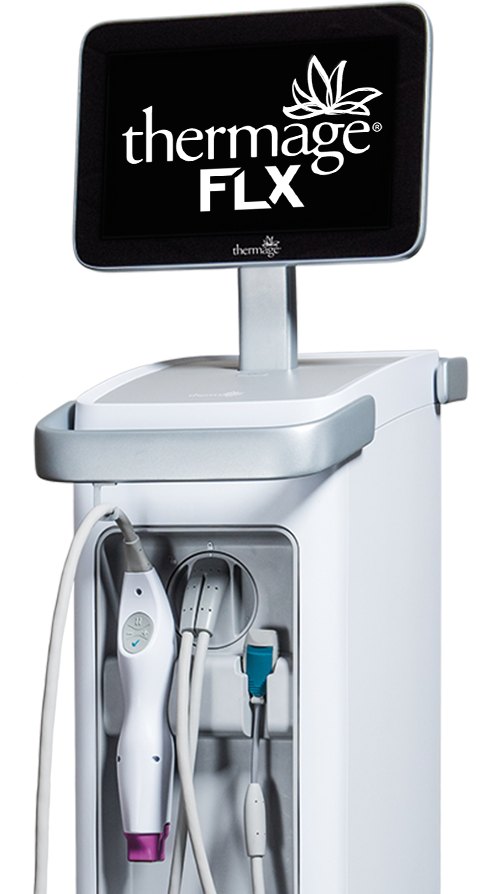
Monopolar RF, single-use tips
Thermage FLX
Solta Medical; cleared 2017
XERF’s predicate; cleared for wrinkles, including the eyelids; a new tip each treatment.
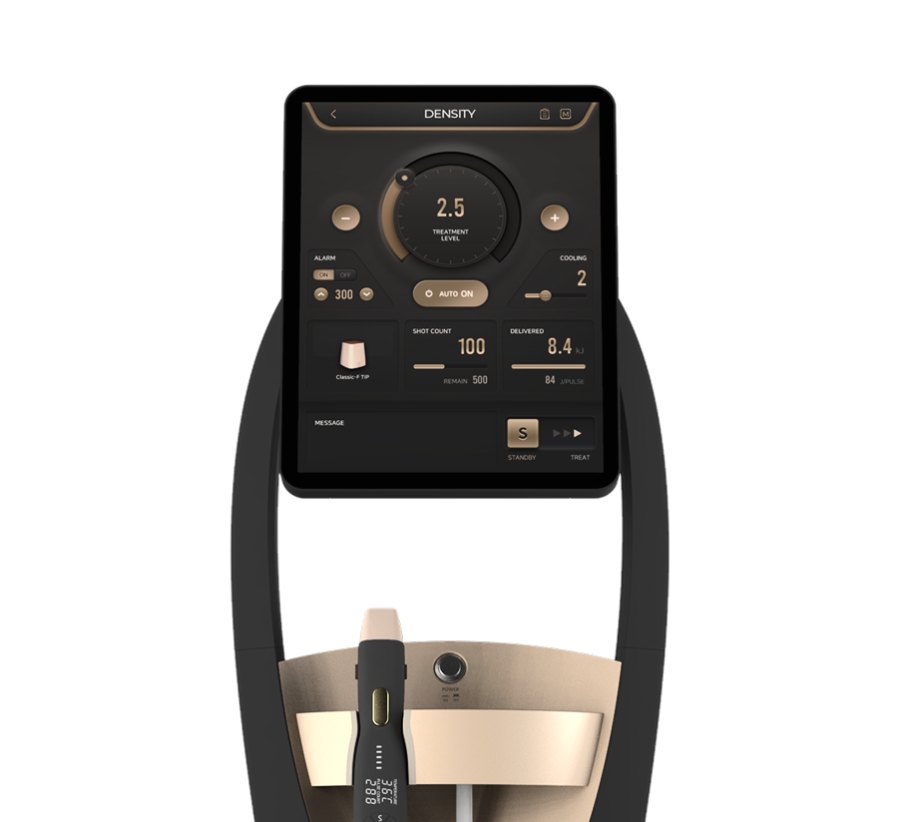
Monopolar and bipolar RF
Density
Jeisys Medical; cleared 2023 and 2025
Another Thermage-predicate RF system with the same electrocoagulation-only clearance.
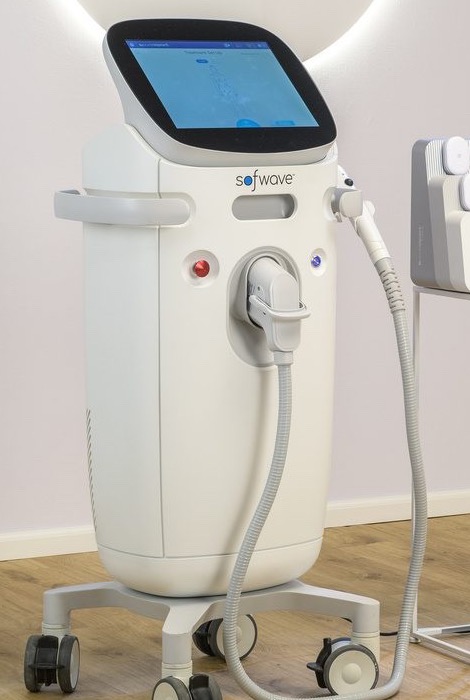
Parallel-beam ultrasound
Sofwave
Sofwave Medical; current filing 2025
Ultrasound with lift wording for the brow, under the chin and the neck; reusable applicators and pulses.
Images: Solta Medical, Jeisys, Sofwave Medical. Compare all five systems in our skin tightening machines guide; Cynosure’s other systems are in our Cynosure equipment guide.
What should the demo and written quote prove?
- The wording you may use: Cynosure Lutronic’s written guidance on advertising XERF, given its electrocoagulation-only clearance, reviewed by your counsel.
- The full instructions for use: contraindications, precautions and adverse events, before you train staff.
- Tip economics: price per EFFECTOR tip, and the tip and shot count recommended for a face and neck.
- A timed, un-numbed treatment: a face and neck by the person who will treat your patients.
- The console: original XERF or XERF 2.0, and what 2.0 changes.
- Service after the warranty: the annual price from year two, response time and loaners.
Ask for references from US practices that have run XERF for at least a year. Already bought one? Our paid consulting covers device launches.
XERF buying questions
How much does a XERF machine cost?
As of November 2026, Cynosure Lutronic doesn’t publish a price for the console or the tips, and we found no federal purchase. Ask for an itemized quote that prices each EFFECTOR tip, because a new tip is used every treatment.
Is XERF FDA approved for skin tightening?
No. XERF is FDA cleared, not approved, for dermatologic and general surgical procedures for electrocoagulation and hemostasis (K251327, August 2025). It has no wrinkle, lift or tightening indication, and its filing included no clinical tests. Cynosure Lutronic says it uses “skin tightening” to describe tightening through soft tissue coagulation.
What is the difference between XERF and Thermage?
Both are monopolar RF with single-use tips, and Thermage FLX was XERF’s predicate. XERF adds a 2 MHz frequency to Thermage’s 6.78 MHz; Thermage FLX’s clearance also covers wrinkles and the eyelids, while XERF’s covers electrocoagulation and hemostasis only.
Does XERF need numbing?
Cynosure Lutronic markets it as “Never-Numb.” In the 39-person US study, no topical anesthetic was used and average pain during treatment was 4.2 of 10, with energy adjusted to each patient’s tolerance. In a 16-patient review, 4 asked for numbing cream, average pain was 4.31 of 10 and 12% reported severe pain.
Is XERF safe for all skin types?
Cynosure Lutronic markets it as “safe for all skin types,” but the 39-person US study enrolled Fitzpatrick skin types I to IV and the 16-patient Israeli review types II to V. Ask for data and settings for the darkest skin types before you market it there.
XERF or Sofwave: which should a practice buy?
They work differently and are cleared differently: Sofwave is ultrasound with FDA lift wording and reusable applicators; XERF is RF cleared for electrocoagulation and hemostasis, with single-use tips. We found no study comparing them. See our Sofwave guide.
XERF or Density: what is the difference?
Both are monopolar RF cleared only for electrocoagulation and hemostasis, and Density’s first clearance and XERF’s both used Thermage FLX as the predicate. XERF adds 2 MHz to 6.78 MHz; Density stays at 6.78 MHz and adds bipolar RF. See our Density guide.
Who can perform XERF treatments?
The FDA device database lists XERF as a prescription device. Who may perform it in your practice depends on your state’s rules and your medical director; confirm delegation with your counsel.
How many XERF treatments do patients need?
Its FDA clearance doesn’t set a cosmetic treatment schedule. The US study gave two treatments four weeks apart, and practices we checked sell XERF as one treatment or a series of two or three.
Who sells XERF in the US?
Cynosure Lutronic sells and supports XERF in the US. Lutronic Corporation, in Goyang, Korea, is the manufacturer named in the FDA filing.
XERF or Ultherapy: which should a practice buy?
They work differently and are cleared differently: Ultherapy is focused ultrasound with imaging and FDA lift wording; XERF is RF cleared for electrocoagulation and hemostasis. We found no study comparing them head to head. See our Ultherapy PRIME guide.
Sources and editorial notes
Last updated November 21, 2026. FDA records, Cynosure Lutronic’s page, practice menus and studies were checked November 21, 2026. Prepared by Darryl, drawing on 9+ years of med spa experience (he owned and managed a practice for 7+ years, then helped build another), with source-based research. Clinical review pending. Darryl has no hands-on experience with XERF; his device experience includes an InMode EmpowerRF platform with Morpheus8 handpieces. NuWays MD is an education and referral resource, not a medical provider. This guide is general business education based on public records, not legal, regulatory or medical advice: confirm indications and advertising wording with Cynosure Lutronic and your own counsel, and treatment settings with your medical director. Product names are trademarks of their makers.
View all 15 sources
- FDA K251327: XERF (2025): the electrocoagulation and hemostasis indication, Thermage FLX predicate, frequencies, power, tips, console and the lab testing; no clinical tests.
- FDA K170758: Thermage FLX (2017): the predicate’s fuller indications.
- FDA: Premarket notification 510(k): what a 510(k) clearance is.
- FDA Global Unique Device Identification Database: the XERF and XERF 2.0 consoles and EFFECTOR 40 and 60 tips; searched November 21, 2026.
- Cynosure Lutronic: XERF: dual frequency, “Never-Numb,” settings, the porcine temperature claims and the US disclaimer on “skin tightening.” Its patient page markets XERF as “safe for all skin types.”
- USAspending.gov: searched November 21, 2026 for XERF and Lutronic; no device purchases found.
- Weiss and colleagues, Cureus, 2026: prospective study of 39 people at 4 US sites; funding and limitations stated. Free full text on PubMed Central.
- Erlich and colleagues, Lasers in Medical Science, 2026: retrospective review of 16 women; tips, shots, pain and the authors’ ties to Cynosure Lutronic. Free full text on PubMed Central.
- Ko and colleagues, Lasers in Medical Science, 2025: computer model and porcine study; three of the seven authors are from Cynosure Lutronic. Free full text on PubMed Central.
- Hong and colleagues, Skin Research and Technology, 2024: a letter on histology; a 2026 correction replaced its “no conflict of interests” statement with one stating that the authors are Cynosure Lutronic employees. Free full text on PubMed Central.
- Angra and colleagues, 2021, Dermatologic Surgery: 40-person prospective trial of the latest-generation monopolar RF, which the XERF US study cites as Thermage FLX. Abstract on PubMed.
- Solta Medical: Thermage patient site: important safety information, including mild to moderate pain during treatment.
- Phoenix Skin, Phoenix and Scottsdale: two full-face treatments $3,000, face and neck $3,500, later treatments $1,500 and $1,750; read November 21, 2026.
- Neaman Medi Spa, Salem, Oregon: one face and neck treatment $1,800 (120 minutes), two $3,200, three $4,200; read November 21, 2026.
- NuWays MD: Skin tightening machines: the other systems’ records and the worked cost example; each system’s guide lists its sources in full.
Useful next reads
BEFORE YOU SIGN
Know what your equipment quote leaves out.
Get the free practice decision kit: a quote-review checklist that goes past the sticker price, plus the planning questions and tools owners use before they commit.
Free. No account needed. Your request isn’t shared with clinics or vendors.THE KIT INCLUDES
- A quote-review checklist that goes beyond the sticker price
- Opening, software and capacity planning questions
- Direct links to the editable planning tools