HAIR & SCALP / EVIDENCE & BUYING GUIDE
Red Light Therapy for Hair Loss: Do Laser Caps and Other Devices Work?
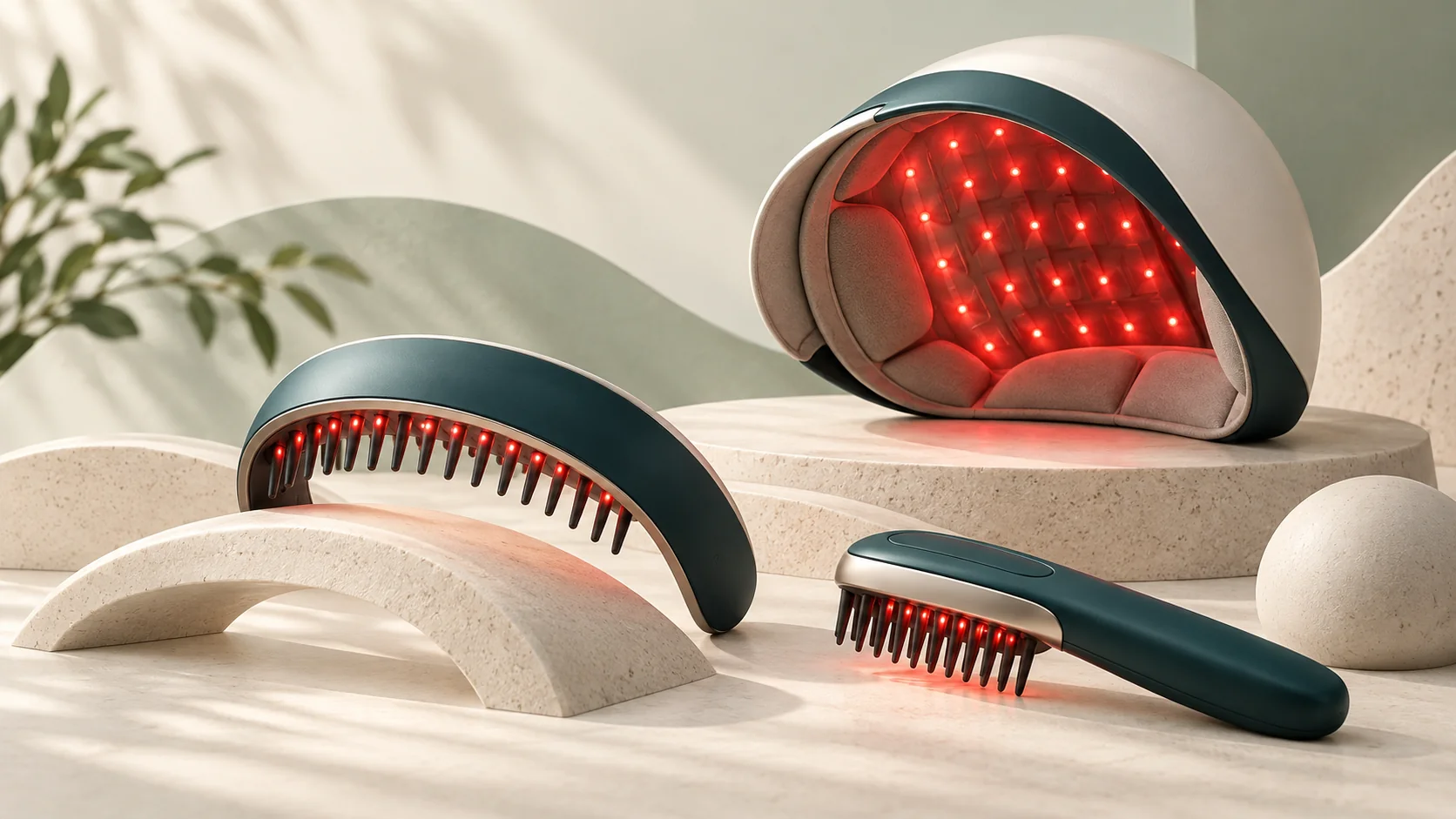
A laser cap can be a reasonable addition to a hair-loss plan. The harder question is whether the evidence, routine and price make sense for you. Here is how to separate a useful device from an expensive promise.
Editorial details
Reader-supported. We may earn a commission from purchase links. As an Amazon Associate we earn from qualifying purchases. Disclosure.
THE ANSWER FIRST
Yes, certain red-light devices can improve hair density in men and women with pattern hair loss. Results take months, vary between people and usually require continued treatment. The evidence is much weaker for other causes of shedding. A higher price or larger diode count does not establish that one cap regrows more hair than another.
Our buying advice: confirm the cause of your hair loss, match the exact device to its evidence, and check the return fee before paying.
Compare the devices ↓Is light therapy a good fit for your hair loss?
The strongest case is androgenetic alopecia, also called male or female pattern hair loss. This is the gradual thinning that can widen a part or reduce coverage over the top of the scalp. It is different from suddenly shedding after an illness, developing a smooth bald patch or losing hair around an inflamed scalp.
A 2025 systematic review included 38 studies and 3,098 people. Most participants had pattern hair loss. The pooled results favored light therapy for that condition, but the studies varied substantially. There was too little evidence for a comparable pooled conclusion about other types of hair loss.
| Your situation | The useful next step |
|---|---|
| Gradual thinning with a confirmed pattern-hair-loss diagnosis | Ask whether a device fits your treatment plan, budget and routine. |
| Sudden shedding, patchy loss, scalp pain or inflammation | Have the cause assessed before shopping for a cap. A device trial can delay the care you actually need. |
| Long-standing areas with very little remaining hair | Discuss realistic coverage goals. Light treatment is not a way to create a new supply of follicles. |
| You want a medicine-free option | Light therapy is worth discussing, with its own limits and an ongoing time commitment. |
| You already use minoxidil or another treatment | Consider it as an addition with your provider. Keep track of what changes so you can judge the plan. |
For help separating possible causes, start with our guide to hair thinning in women. The American Academy of Dermatology also explains why diagnosis comes before treatment.
What does the research actually show?
Red light therapy for hair growth is often called low-level light or laser therapy (LLLT) or photobiomodulation. Low-power light is intended to influence activity in existing follicles. That is a different use of light from the heat-based laser treatments used to remove hair.
Controlled studies count hairs in a defined scalp area. That gives you a more useful measure than the brightness of a device or an advertising photograph. Here are four studies that help put the claims in perspective.
| Research | People and duration | Finding and buying relevance |
|---|---|---|
| Jimenez et al., 2014 | Four trials; 269 randomized, 225 included in efficacy analysis; 26 weeks | HairMax lasercombs improved terminal-hair density compared with sham devices. These were 7-, 9- and 12-beam combs, not today’s bands and caps. |
| Fan et al., 2018 | 100 enrolled; one side of the scalp treated, the other given sham light; 24 weeks | The treated side improved more. This supports the tested system, not automatic superiority of later models with more emitters. |
| Esmat et al., 2017 | 45 women in three groups; four months | Light, minoxidil and their combination were compared. The combination led on some measures, but each group had only 15 people. |
| 2025 trial in men | 91 enrolled, 75 completed; six months | Both light treatment and 5% minoxidil groups improved. No statistically significant between-group difference was detected; this was not proof that all devices equal minoxidil. |
In the 2014 trials, HairMax’s manufacturer at the time partially funded the research and supplied equipment; some authors reported related payments or support. The loss to follow-up and limited representation of darker skin tones also matter. These details help explain how confidently the findings apply to you.
What a hair-count improvement looks like
A small measured area can gain hairs while the visible change remains modest. Lighting, styling, hair length and the starting amount of thinning all affect what you notice in the mirror.
The broader review of randomized home-device trials supports a real treatment effect for pattern loss. It also shows why comparing advertised percentages across brands is unreliable: devices, schedules and study designs differ. Compare percentages only when the studies measure the same outcome in comparable people.
Our conclusion: light therapy is a reasonable option for pattern hair loss. Choose between current devices by relevant evidence, routine, fit and cost.
Laser, LED, cap or comb: what should you compare?
“Red light” describes a broad category. Lasers and LEDs are different light sources; caps, helmets, bands and combs are ways of delivering that light. Some devices combine sources.
| Format | Practical advantage | What to check |
|---|---|---|
| Cap or helmet | Covers several areas while you sit or move around | Fit, contact with the intended scalp area, battery or cord needs and the full weekly schedule |
| Band | Short sessions on selected scalp positions | Whether you will reliably move it through the required positions |
| Comb | Lets you part hair and work through selected areas | The technique and time required for complete treatment |
| General red-light panel or face mask | May already be in your home | Hair-growth evidence, intended use and scalp dose for that exact setup |
Are lasers better than LEDs for hair growth?
The label alone cannot settle that. A randomized study in women used a helmet with both lasers and LEDs: 47 women were recruited and 42 completed the 16-week study. The active group improved more than the sham group. Separately, the FDA has cleared an LED-only hair device, REVIAN RED.
Laser-only and combined-light systems both have supporting research. Evaluate the exact device, delivered light and clinical evidence together.
Does a higher diode count or another wavelength mean better results?
It can change coverage and treatment design. It does not, by itself, show better regrowth. The 2021 device review describes different wavelengths, powers and schedules across successful trials; it does not provide a reliable league table of today’s products.
For a meaningful upgrade claim, look for a direct comparison of the models, with the same population, treatment period and outcome. Otherwise, treat extra emitters, added near-infrared wavelengths and shorter sessions as specifications to evaluate, rather than proof of a bigger hair-growth benefit.
What does FDA clearance tell you?
These devices generally use the FDA’s 510(k) clearance pathway, which assesses substantial equivalence to a legally marketed device. Clearance is specific to a device and its intended use. It is not an FDA ranking or a promise of your result. Registration or listing alone is not the same thing. FDA explanation.
The records for HairMax’s 82-beam device, iRestore Professional 282 and iRestore Elite specify particular male and female pattern-loss classifications and Fitzpatrick skin types I–IV. Those are limits of the indicated populations, not a reason to assume the same evidence applies to every hair-loss pattern or skin tone.
If your situation falls outside the labeling, discuss that evidence gap with a dermatologist.
Five devices compared: evidence, routine and price
Start with the routine you can maintain and the amount you are comfortable spending. Our picks below are based on published specifications, research and policies, rather than hands-on testing. Prices are U.S. direct-site listings checked October 25, 2026, before tax and shipping. Promotions and retailer terms can change.
Choosing between these two brands? Our HairMax vs. iRestore comparison puts LaserBand and Professional, then Lumina and Elite, side by side on routine, price and return costs.
For the shortest weekly routine
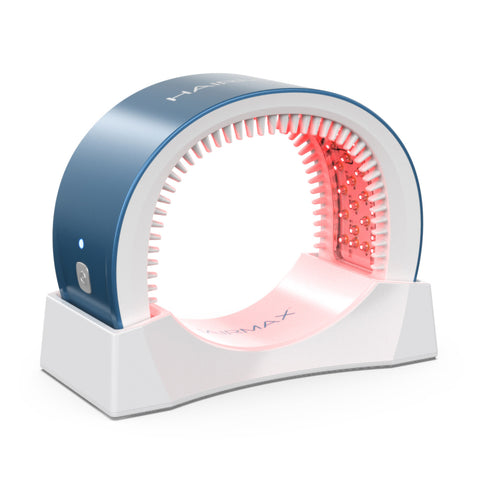
HairMax LaserBand 82 ComfortFlex
Repositioned band / laser
- Checked direct price
- $849
- Treatment commitment
- 4.5 minutes / week 90 seconds, three times weekly
- Direct-purchase return
- 6 months · 20% fee $169.80 at this price
- Device warranty
- 1 year
Why consider it: You want treatment to take minutes rather than an hour or more each week. Its 82 lasers and hair-parting teeth treat the scalp in a sequence of positions.
The trade-off: You must move the band through those positions. Choose a cap or helmet if you would rather put it on and leave it in place.
Evidence and exact-model record
HairMax’s controlled trials tested earlier 7-, 9- and 12-beam combs. That is relevant background for the technology; a ComfortFlex-specific regrowth advantage remains unproven.
Buying on Amazon? Check that listing’s price, seller and return terms. Manufacturer-direct prices and return guarantees shown here may differ.
For a lower upfront helmet price
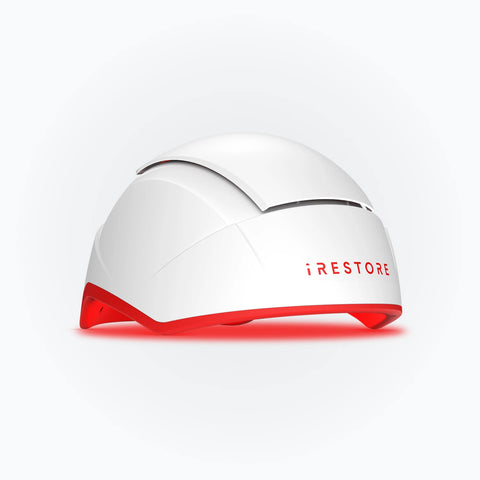
iRestore Professional 282
Helmet / laser + LED
- Checked direct price
- $899
- Treatment commitment
- 87.5 minutes / week 25 minutes every other day
- Direct-purchase return
- 365 days · 25% fee $224.75 at this price
- Device warranty
- 2 years
Why consider it: At the checked $899 sale price, this is the least expensive hands-free helmet in our five-model comparison. It combines 82 lasers with 200 LEDs.
The trade-off: Its individual sessions are the longer of the two iRestore helmets here. Paying more for Elite buys a shorter session, while total weekly treatment time stays similar.
Evidence and exact-model record
The Professional 282 clearance includes substantial-equivalence and performance testing. The earlier iRestore scalp trial used a different system, so it cannot establish that 282 emitters outperform today’s alternatives.
Buying on Amazon? Check that listing’s price, seller and return terms. Manufacturer-direct prices and return guarantees shown here may differ.
For shorter, daily helmet sessions
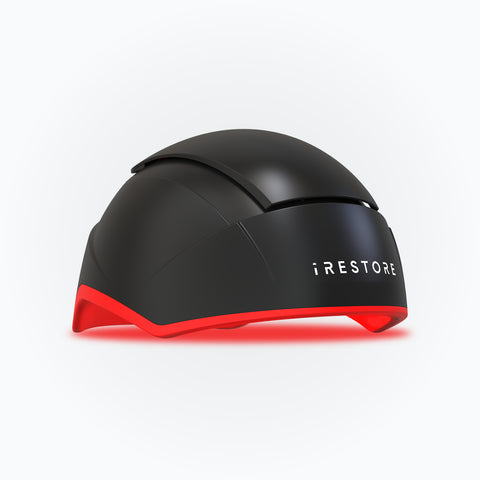
iRestore Elite
Helmet / laser + LED
- Checked direct price
- $1,899
- Treatment commitment
- 84 minutes / week 12 minutes daily
- Direct-purchase return
- 365 days · 25% fee $474.75 at this price
- Device warranty
- 3 years
Why consider it: Twelve minutes can fit a daily routine more easily than a 25-minute session. Elite has 500 combined laser and LED emitters, plus a longer warranty than Professional.
The trade-off: The checked price is $1,000 more than Professional, for just 3.5 fewer treatment minutes per week. Buy for the features you value; the reviewed records do not establish greater regrowth in a clinical head-to-head trial.
Evidence and exact-model record
Elite’s clearance record includes nonclinical testing and predicate comparisons. We found no direct clinical comparison with Professional in the records reviewed for this guide.
Buying on Amazon? Check that listing’s price, seller and return terms. Manufacturer-direct prices and return guarantees shown here may differ.
For a brief daily cap routine
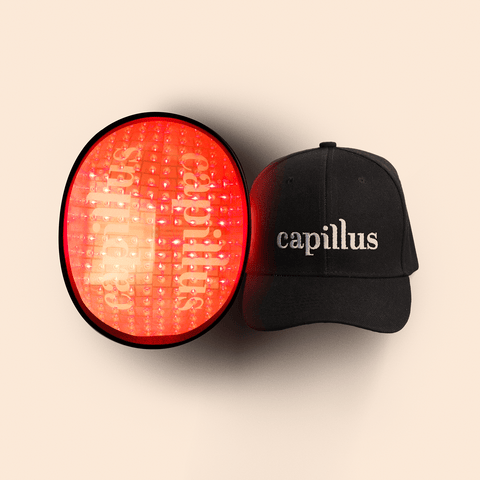
Capillus PRO
Cap / laser
- Checked direct price
- $1,699
- Treatment commitment
- 42 minutes / week 6 minutes daily
- Direct-purchase return
- 6 months · 25% fee $424.75 at this price
- Device warranty
- 3 years, limited
Why consider it: This 272-laser cap takes six minutes a day, the shortest hands-free session in this comparison. It suits someone who prefers a daily habit to longer alternate-day sessions.
The trade-off: Confirm fit before ordering. Its clinical history is worth reading closely: the controlled women’s trial used a different schedule from the one sold today.
Evidence and exact-model record
A 17-week controlled trial in 44 women reported improvement with a 272-laser cap. Participants used 30-minute sessions every other day, rather than today’s six-minute daily routine.
For an all-laser cap at a lower listed price
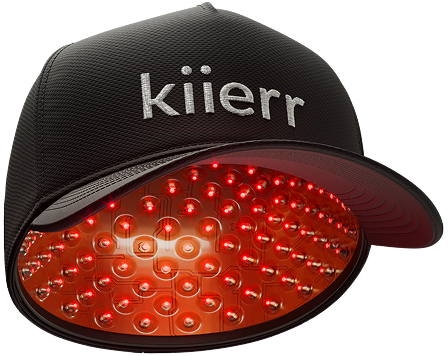
Kiierr 272 Premier
Cap / laser
- Checked direct price
- $1,199
- Treatment commitment
- 105 minutes / week 30 minutes every other day
- Direct-purchase return
- Days 210–240 · conditions apply 25% fee; possible documentation waiver
- Device warranty
- 2 years; battery terms differ
Why consider it: At $1,199, this 272-laser cap costs $500 less than Capillus PRO in our dated comparison. The trade is a much longer weekly routine.
The trade-off: The growth guarantee needs registration and a before photo within 45 days. Calendar the request window; waiving the usual $299.75 fee requires seven monthly photo or video records.
Evidence and exact-model record
The FDA record names the 272 Premier. Kiierr’s FAQ acknowledges that not every model has a separate trial. Confirm the purchase-versus-receipt deadline wording with the company before relying on its guarantee.
For a new purchase, save the exact model name, current offer and seller’s return policy. When buying through Amazon or another retailer, check who sells the device and which guarantee applies. A manufacturer’s direct-purchase guarantee may exclude that order.
How often should you use it, and when should you expect results?
Follow the instructions for your exact model. The schedules differ enough that copying another brand’s routine is a poor shortcut. For example, Capillus specifically warns that exceeding its recommended use may have a negative effect. Capillus PRO instructions and terms.
YOUR WEEK / TREATMENT TIME
Compare the week, not just the session.
The surprising comparison: Elite’s 12-minute daily sessions total 84 minutes a week. Professional’s 25-minute sessions every other day average 87.5 minutes. Elite shortens each session, but barely changes total treatment time. That can still suit your routine; it is a different benefit from saving half the time.
A practical progress calendar
YOUR PROGRESS / THREE CHECKPOINTS
Give the trial a fair start and a clear review.
Confirm the diagnosis and routine. Take baseline photos. Save the return policy and register the device if required.
Follow the exact schedule and record symptoms or treatment changes. Avoid judging regrowth from a few days of shedding.
Many trials assessed outcomes in this range. Compare consistent photos and review progress with your provider, while protecting any earlier return deadline.
Take baseline and follow-up photos with the same lighting, angle, part and hair condition. Record other treatment changes alongside them. This makes your own photos more informative than comparisons between a wet, exposed scalp and a carefully styled after picture.
Before-and-after pictures can illustrate an outcome. To interpret them, ask what else the person used, how long treatment lasted and whether the image is typical or a selected success. Keep return deadlines in your calendar separately from the clinical review date.
Will you need to keep using a laser cap?
Plan for ongoing treatment if it helps. Pattern hair loss continues over time, and maintenance is part of the decision. There is no dependable, model-wide timeline for how quickly any benefit fades after stopping. Ask your provider and check the device instructions before reducing the schedule. AAD guidance.
What does a laser cap really cost to own or return?
The purchase price is the starting point. Your decision also includes time, possible replacement parts, repair coverage and the amount you could lose if the device disappoints.
A warranty and a growth guarantee answer different questions. A warranty addresses covered defects. A satisfaction or growth guarantee governs an eligible return, often with a deadline, fee and documentation requirements.
| Brand / direct purchase | Return terms that matter | Fee at the prices above |
|---|---|---|
| HairMax | Within six months of delivery; 20% fee; return authorization and customer-paid return shipping | LaserBand 82: $169.80 |
| iRestore | Policy for purchases from October 2, 2026: 365 days from purchase, with a 25% service fee; authorization required | Professional: $224.75; Elite: $474.75 |
| Capillus | Product page states six months from purchase, 25% fee and customer-paid return shipping; authorization required | PRO: $424.75 |
| Kiierr | Standard growth guarantee requires registration with a before photo within 45 days of receipt and a request in the 210–240-day window; 25% fee can be waived if documentation requirements are met | Premier: $299.75 before a qualifying waiver |
These are calculated percentage fees on the listed device price, not total return costs or guaranteed refunds. Shipping, eligibility, bundles and the actual amount paid can change the outcome.
Kiierr’s policy uses both purchase and receipt wording around its seven-month clock. Confirm your exact deadline in writing, and keep the registration confirmation. Its fee-waiver route requires monthly photos or videos, with seven records reviewed by the company. That is a substantial condition, not an automatic fee-free return.
THE GUARANTEE / FEE BEFORE SHIPPING
What an eligible return can still cost.
Spread the upfront price across a three-year budget
If a $899 device lasts for three years with no paid repairs, its purchase cost averages about $25 a month over those 36 months. A $1,899 device averages about $53 a month. Those are budgeting examples, not subscriptions, financing offers or predictions of lifespan.
Compare that upfront commitment with your actual medication or office-treatment plan. Our minoxidil cost guide calculates topical supply, prescription and ongoing-care budgets, while the PRP guide explains a different treatment route. Budget for each treatment you intend to continue.
Can you use light therapy with minoxidil or finasteride?
Yes, a provider may include light therapy alongside medication. The useful question is what the addition is expected to do, how you will use both and when you will review progress.
The small women’s trial above found advantages for light plus minoxidil on some outcomes. That supports discussing a combination, but it is too small to promise an extra percentage of growth. Its twice-daily 5% minoxidil regimen should not be copied as general advice for women; U.S. directions differ by product.
Light therapy is not an established DHT-blocking treatment. If finasteride is part of your plan, discuss changes with the prescriber rather than treating a cap as a like-for-like replacement. AAD treatment overview.
For topical use, follow the device and medication instructions on scalp condition and application order. Avoid guessing that applying more product before the light will improve absorption. If a solution’s texture or irritation is the problem, compare foam and liquid before spending hundreds on another treatment.
Side effects and situations to discuss first
Short trials generally report good tolerability, but long-term evidence is less complete. Temporary irritation or discomfort can occur. The AAD advises a review first if you have a light-sensitive condition, take a photosensitizing medicine or have a darker skin tone. Use any eye protection required by the device; sunglasses are not a substitute for specified protective goggles. AAD safety guidance.
- Pregnancy, breastfeeding or use in children: ask a qualified provider and check the exact labeling. The adult pattern-loss trials do not establish safety for these groups.
- Scalp sores, a suspicious lesion, significant pain or an active scalp condition: get the area assessed rather than treating through it.
- Eye symptoms, burns or marked irritation during use: stop using the device and seek appropriate medical advice. Do not look directly into the emitters.
- Hair loss after an illness, rapid weight change or a medication change: address the possible trigger. A cap marketed for pattern loss may not answer that problem.
More shedding after starting a device is not proof that it is working. Record the change and discuss persistent or substantial loss, especially if the diagnosis is uncertain. If you also started minoxidil, our minoxidil shedding guide explains its product-specific follow-up instructions.
Before you spend: make a decision you can review
You should be able to answer five questions before checkout:
- What am I treating? A confirmed type of hair loss, with a realistic coverage goal.
- What supports this device? Its exact model, intended use and the closest relevant clinical evidence.
- Will I use it? The full weekly schedule, fit and positioning requirements.
- What can I afford to lose? Purchase price, return fee, shipping and any documentation conditions.
- When will I reassess? Consistent photos, a planned progress review and a separately recorded return deadline.
A good device decision may be a purchase, a lower-cost model or waiting until the cause of thinning is clearer. The goal is a treatment plan you can follow and evaluate, rather than a drawer full of products.
Frequently asked questions
Does red light therapy work for women’s hair loss?
Controlled trials include women with pattern hair loss. That supports considering it for that diagnosis, but does not extend the same result to postpartum shedding, alopecia areata or every cause of thinning. The device’s indications and a diagnosis matter more than whether its advertising says “for women.”
What is the best red light therapy device for hair growth?
Among the five models compared here, LaserBand 82 has the shortest weekly routine, iRestore Professional has the lowest checked hands-free helmet price, and Capillus PRO has the shortest daily hands-free session. Those are practical advantages, not demonstrated rankings of regrowth. Match the device to your diagnosis, budget and routine; review the model profiles before choosing.
Can I use a cheap red-light panel or an LED face mask on my scalp?
Evidence for a scalp device does not automatically transfer to a panel or face mask. Distance, coverage, hair blocking the light and dose differ. Choose a product intended for hair loss and follow its instructions; do not improvise a longer exposure to compensate.
Is infrared light better than red light for hair growth?
Near-infrared and visible red light are different wavelength ranges. Some products combine wavelengths, but the reviewed clinical evidence does not establish a general rule that adding infrared produces more regrowth. Evaluate the actual device and study, not the number of colors advertised.
Does it work on a receding hairline or a completely bald scalp?
Pattern-loss classifications and coverage vary by device. Discuss your hairline specifically instead of assuming a crown result transfers to the temples. Expectations should be especially modest in long-standing areas with very little hair; light does not supply replacement follicles.
Can you use a laser cap every day or leave it on longer?
Some models are designed for daily use; others are not. Use the exact schedule supplied. More time is not a proven way to improve results, and doubling a session is not a sensible way to make up for missed treatments.
Will light therapy block DHT?
It is not an established substitute for medicines that target DHT. Think of light therapy as a different approach that may sit alongside a medical plan. Discuss stopping or replacing a prescription with your provider.
Can I use it with Nutrafol or rosemary oil?
These are different interventions, and using several together makes it harder to identify which one helped or caused irritation. Review supplements and scalp products with your provider and follow device instructions about application. Our Nutrafol-versus-minoxidil comparison and rosemary evidence review explain the separate evidence bases.
Do I have to shave my head, and what about thick hair?
The home combs, bands and caps discussed here are designed for use on a scalp with hair. Follow the positioning instructions. Hair-parting teeth and cap fit affect access to the scalp; a higher emitter count alone does not show how much light reaches your particular thinning area.
Is a money-back guarantee the same as a free trial?
No. You usually pay first, then must meet the return conditions. At the prices checked here, a 25% fee on iRestore Elite would be $474.75 before other applicable costs. Save the policy that applies to your order and calendar its deadline.
How do I judge reviews on Reddit or Amazon?
Use them for practical questions such as fit, comfort, charging and customer service. Regrowth stories are harder to interpret without a diagnosis, consistent photos and a record of other treatments. A testimonial is useful context, but it cannot establish your expected outcome.
How we researched this guide
We reviewed primary trials, systematic reviews, FDA records, current manufacturer listings and direct-purchase return policies. We compared the exact models and calculated weekly treatment time and percentage return fees from the published terms. We have not worn these devices, measured their output or conducted a regrowth trial. Clinical review is pending.
Our selection covers five recognizable models and a separate cordless alternative. Product images are manufacturer images used to identify the devices discussed, not our own testing photographs. Manufacturer information is used for specifications and commercial terms; clinical claims are checked against research. Affiliate availability does not establish a product’s efficacy or place in the comparison. See our editorial standards and disclosures.
Research and prices checked October 25, 2026. Recheck the live seller terms before buying. If a specification or policy changes, tell our editorial team.
Product and return-policy sources are linked beside each model and in the cost table so you can check the current terms directly.
View all 14 sources
Research and regulatory references
- Perez et al.: 2025 systematic review and meta-analysis.
- Lueangarun et al.: randomized home-device trials and technology review.
- Jimenez et al.: four randomized HairMax lasercomb trials.
- Fan et al.: 24-week split-scalp trial.
- Esmat et al.: light, minoxidil and combined treatment in women.
- 2025 randomized comparison of light and minoxidil in men.
- Lanzafame et al.: laser/LED helmet study in women.
- FDA HairMax record K142573; later record identifying the LaserBand name.
- FDA iRestore Professional K183417 and Elite K222081.
- FDA Capillus K163170 and Kiierr K181878.
- FDA REVIAN RED K173729.