INJECTABLES / UNDER-EYE HOLLOWS
Under-Eye Filler: Cost, Side Effects, How Long It Lasts and Who It Suits
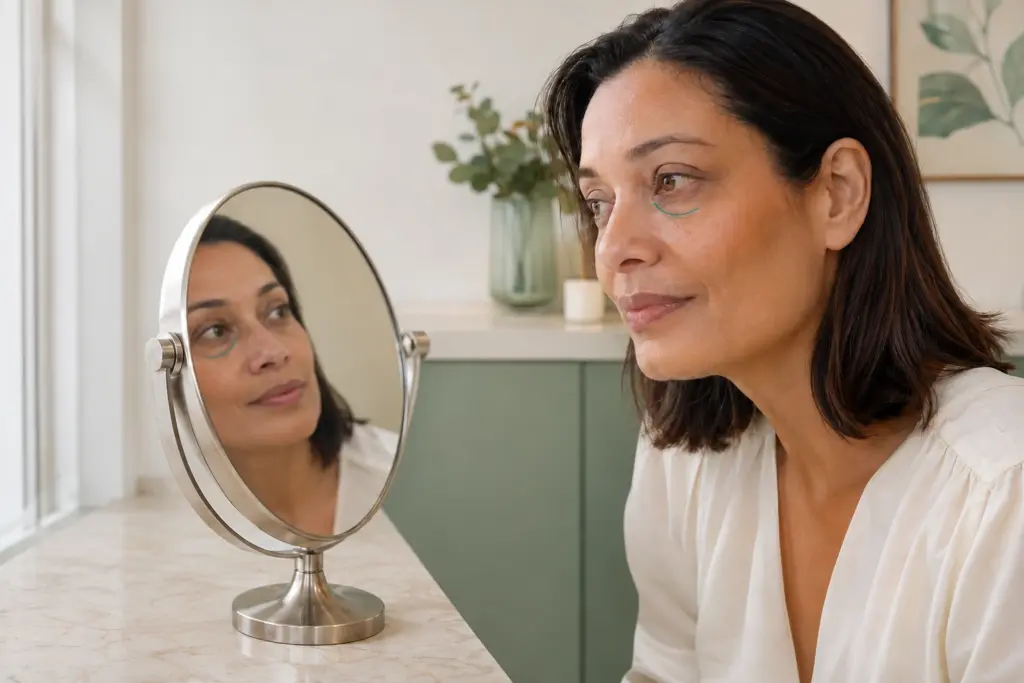
Under-eye filler is a soft hyaluronic acid gel placed along the bone below your eye to fill a hollow that casts a shadow. When that hollow is the cause, it can make you look less tired. It will not lighten brown pigment, shrink puffy bags or tighten loose skin. Here is how to tell which problem you have, what treatment costs, how long results last and which side effects to watch for.
Check if it suits you ↓Editorial details
The quick answer on under-eye filler
Best for
A hollow that casts a shadow where the lower eyelid meets the cheek. Filler does not treat pigment, puffy bags or festoons, and the Eyelight and Belotero Balance (+) trials left out people prone to under-eye swelling.
Cost
Posted under-eye prices we checked ran from $599 to $850 per full syringe. Practices we checked say most people need one or two syringes for both eyes. Estimate your total.
How long it lasts
Around a year for many people. In the four FDA trials, 60% to 81% of participants assessed about a year later were still rated improved, and many had a touch-up first.
Side effects
Tenderness, swelling and bruising are common and usually settle within about a week. Rarely, filler blocks a blood vessel. Know the warning signs.
What is under-eye filler?
Under-eye filler, also called tear trough filler, is a gel injected deep along the bony rim below your eye. With age, the area where the lower eyelid meets the cheek can hollow out, and that groove catches shadow. The shadow reads as darkness or tiredness even when your skin color is normal. Filler adds back volume so the eyelid and cheek blend more smoothly. Cleveland Clinic: dark circles under the eyes.
All four fillers FDA-approved for this area are hyaluronic acid (HA) gels. HA filler can be dissolved with an enzyme if needed, which matters in such a thin, visible area; the enzyme works on HA, so other filler materials cannot be removed this way. How dissolving works. Hyaluronidase review, 2025.
Is under-eye filler FDA-approved?
Some products are. Four HA fillers are FDA-approved for under-eye hollows in adults over 21, or 22 and older for one of them. Any other filler used under the eyes is off-label, which means it is not FDA-approved for that use. The approvals cover these specific products for the under-eye hollow, not every filler or every injection around the eyes, which is why the product name matters. See the four approved fillers. FDA: dermal fillers.
Will under-eye filler help your dark circles?
Only if a hollow is causing the shadow. Dark circles have several causes, and filler treats one of them. Cleveland Clinic lists aging and thinning skin, tear trough hollows, genetics, eczema, rubbing your eyes, sun-related pigment and lifestyle factors. More than one cause can be present at once, so the assessment matters as much as the product. Cleveland Clinic: dark circles under the eyes.
| Likely cause | Can filler help? |
|---|---|
| A hollow or groove A groove or step where the lower eyelid meets the cheek, casting a shadow | Yes. This is what the FDA trials treated, in people with moderate or severe hollows. |
| Brown pigment Darker skin color under the eye, from sun exposure or family traits | No. Filler adds volume; it does not change skin color. |
| Puffy bags or festoons Fat or fluid bulging below the lower lid, or eyes that swell easily | Not on its own. Filler adds volume, while eyelid surgery is the option that removes or repositions fat. |
| Thin skin A bluish or purple tone where vessels show through | Limited. Filler can show through thin skin as a bluish tint. |
These answers follow who the FDA trials studied. Three trials left out pigment-based dark circles and large fat pads; one or two also left out festoons, swelling-prone eyes or thin, atrophic skin. Volbella XC, Restylane Eyelight and Belotero Balance (+) FDA summaries.
Often a good fit
- A provider confirms the darkness is mostly shadow from a hollow.
- Your cheeks give the under-eye area enough support, or the plan treats them first.
- You are over 21 and want a temporary result that can be adjusted or dissolved.
Pause and ask first
- Puffy bags, festoons, or eyes that swell with allergies or rosacea.
- Brown pigment as the main cause of the darkness.
- Pregnancy or breastfeeding. The labels say safety has not been studied.
- Severe allergies, a lidocaine allergy or a history of thick scars.
- Earlier eyelid surgery or recent filler near your eyes. The Volbella XC trial left these people out.
How much does under-eye filler cost?
Five practices we checked post under-eye prices of $599 to $850 for a full syringe. Half-syringe or 0.5 mL prices at three practices ran from $349 to $600. One other practice lists Volbella XC, an FDA-approved under-eye filler, at $879 per syringe for any area. For comparison, the American Society of Plastic Surgeons lists an average fee of $715 for HA filler, not specific to the under-eye area. ASPS: dermal filler cost.
What one syringe costs
How many syringes will you need?
Plan for about 1 to 2 mL for both eyes at the first visit, plus a possible touch-up. With 1 mL syringes, that is one or two. Ask whether a touch-up is included or charged separately. The FDA trials enrolled people with moderate or severe hollows. In the Eyelight, Belotero Balance (+) and RHA Redensity Eye trials, the first treatment used an average of 1.34 to 1.55 mL for both eyes. In three of the trials, 56% to 78% of treated people also had a touch-up about a month later. A milder hollow may need less, which is why some practices start with one syringe or a half syringe. Eyelight, Belotero Balance (+) and RHA Redensity Eye FDA summaries; Volbella XC patient labeling.
Smaller amounts can cost more per mL. At Express Med Spa, two half syringes ($698) cost more than one full syringe ($599). In Sherman Oaks, a 0.5 mL syringe of Restylane Eyelight at $500 works out to $1,000 per mL. Ask for the volume in mL so you compare like with like.
What should an under-eye filler quote include?
- The product name, and whether it is FDA-approved for under-eye hollows.
- The total mL for both eyes, and the price per syringe or per mL.
- Whether a touch-up visit is included, and its price if not.
- Any consultation fee or deposit, and whether it is credited to treatment.
- The price of dissolving filler if you need it later.
Example budgets, not quotes: at the full-syringe under-eye prices above, one syringe costs $599 to $850 and two cost $1,198 to $1,700. If you repeat with one syringe about once a year, that is $599 to $850 a year before any fees. Our dermal filler cost guide explains how to read a full quote.
Which fillers are FDA-approved for under the eyes?
Four HA fillers have FDA approval for under-eye hollows. Each approval rested on a trial that compared treated people with people who got no treatment at first. In every trial, “improved” meant at least one grade better on both sides on the trial’s hollow scale, judged by an evaluator who did not know who was treated.
| Filler and FDA approval | Main trial, first check-up | About a year later |
|---|---|---|
| Juvéderm Volbella XC May 2021, adults over 21 | 140 people. 83.1% improved vs. 15.6% untreated at 3 months | 73.4% at 12 months |
| Restylane Eyelight May 2023, over 21 | 333 people. 87.4% vs. 17.7% at 3 months | 63.5% at 12 months |
| Belotero Balance (+) September 2023, adults over 21 | 150 people. 80.6% vs. 1.9% at 8 weeks | 81.4% at 48 weeks |
| RHA Redensity Eye May 2026, 22 and older | 248 people. 79.0% vs. 9.8% at 12 weeks | 60.5% at 52 weeks |
These numbers are not a ranking. Each trial used its own hollow scale, a different first check-up and different follow-up rules, and the one-year figures count only people still in the study. Most participants in all four trials were women (83% to 92%) and most were white, with typical ages between about 43 and 50. In the Volbella XC trial, results were similar across skin types, including the darkest skin types (V and VI), where 15 of 17 people met the improvement bar at 3 months, though those groups were small. Ask how your age, skin tone and anatomy change the plan. Sources: Volbella XC, Restylane Eyelight, Belotero Balance (+) and RHA Redensity Eye FDA summaries.
All four contain a numbing medicine: lidocaine, or mepivacaine in one version of RHA Redensity Eye. Other HA fillers, including other Restylane and Juvéderm gels, are sometimes used under the eyes off-label. That is a provider’s judgment call, so ask why they prefer a product and whether it can be dissolved.
How long does under-eye filler last?
Around a year for many people. The Volbella XC patient labeling describes results lasting up to 1 year with optimal improvement. The Belotero Balance (+) guide says results lasted over 48 weeks for most people in its study. Across the four trials, 60% to 81% of participants assessed at 48 to 52 weeks were still rated improved. Many had a touch-up in the first month, and the trials started that clock at different points (the first or the last injection). Volbella XC under-eye patient labeling; Belotero Balance (+) patient guide.
You see a change right away, but swelling can blur the final look for the first week or two. Most of the trials then offered a repeat treatment at about 12 months. In the Eyelight and RHA Redensity Eye trials, the repeat used less filler on average than the first treatment (1.08 vs. 1.34 mL and 0.91 vs. 1.52 mL).
Can filler stay longer than the result?
Yes. The gel can outlast the visible result. A 2024 MRI study scanned 33 people who had HA filler in the mid-face. Filler still showed in all of them at least two years after their last injection, and in one person 15 years later. The study was small, and nine people had scans because of swelling concerns, so it does not tell you how long results look good. It does explain why you should tell a new provider about old filler. HA filler longevity on MRI, PRS Global Open, 2024.
How to judge before-and-after photos
Photos are easy to over-read. Compare pictures taken in the same lighting, angle and expression, without makeup, and at least two weeks after treatment, once early swelling has settled. Ask to see the injector’s own patients with hollows like yours, including photos from months later, not just the first weeks. Lighting matters: a 2024 framework for injectors stresses appropriate lighting when assessing under-eye shadows, and the 2024 MRI study notes that precise clinical photography is needed for accurate comparisons. Assessment framework; MRI longevity study.
What happens at an under-eye filler appointment?
Practices we checked list about 30 to 45 minutes. Here is what usually happens, based on the FDA labeling and trial procedures.
- Assessment. Your provider examines the hollows and the skin around them, discusses pain control and may take photos.
- Numbing. A numbing cream, such as lidocaine cream, may be applied. The filler itself also contains a numbing medicine.
- Injection. Small amounts are placed along the bone under each eye with a fine needle or a blunt-tipped cannula. The trials allowed both, and the Restylane Eyelight label limits each session to 1 mL per side.
- Checks before you leave. The Volbella XC and Eyelight trials tested vision before and after each treatment, and the RHA Redensity Eye instructions encourage providers to do the same.
- Follow-up. Plan a review about a month later. That is when a touch-up was offered in three of the trials.
Sources: Volbella XC patient labeling, Restylane Eyelight instructions for use, RHA Redensity Eye FDA summary; times from the Express Med Spa and Cosmetica Med Spa menus.
Under-eye filler recovery: swelling and bruising day by day
Plan for about a week of possible swelling, tenderness or bruising. In the Volbella XC trial, most of these reactions were mild and the majority cleared within a week. A few take longer, so avoid booking treatment right before an important event. Volbella XC FDA summary.
What recovery usually looks like
Expect small needle or cannula marks, some swelling and possibly a few bumps.
The Volbella XC labeling says to minimize strenuous exercise and heavy sun or heat. The Belotero Balance (+) guide adds no pressing on the area, no makeup on treated skin and no alcohol for 12 to 24 hours.
Swelling and bruising usually settle. In the Eyelight trial, swelling lasted 2 to 7 days for about three in four people who had it.
Some reactions linger. In the Volbella XC trial diaries, about one in five people who noticed lumps or bumps reported them for 15 to 30 days. This is also when a touch-up visit usually falls.
New swelling, lumps or a bluish tint deserve a review. Delayed swelling is uncommon, but it has been reported months and even years after treatment.
Sources: Volbella XC patient labeling, Belotero Balance (+) patient guide, Eyelight FDA summary and tear trough filler systematic review, 2022.
Under-eye filler side effects and risks
Most side effects are short-lived reactions where the filler went in. In the Volbella XC trial diaries, tenderness was reported by 48% of people, swelling by 42% and bruising by 40%, and most rated these mild. People could report more than one reaction. Less common problems include a bluish tint, lumps that last, and swelling that appears or returns later. The rare but serious risk is filler blocking a blood vessel. Volbella XC FDA summary.
- Lumps and bumps. Reported by 38.6% of people in the Volbella XC diaries, usually mild. Lumps that persist may be smoothed with more filler, dissolved, or settle with time, according to the Eyelight label.
- A bluish tint (Tyndall effect). Filler can show through thin skin as a blue-gray color. In the Volbella XC trial, it was seen in 7 eyes of 4 treated people at day 30. A systematic review also lists blue-gray discoloration among the side effects of tear trough filler.
- Late swelling. In the Volbella XC trial, 3 people had mild swelling that began more than 30 days after treatment and resolved within 45 days. In the RHA Redensity Eye trial, 5 people had a side effect lasting more than 90 days, the longest a mild swelling that resolved after 264 days. The Eyelight label says delayed inflammation and granulomas (inflammatory lumps) have been reported in low numbers more than 2 years after Restylane fillers under the eye. RHA Redensity Eye FDA summary; Eyelight instructions for use.
- Treatment-related problems in the trials. Investigators judged 12.7% of Eyelight-treated people and 9.0% of Belotero Balance (+)-treated people to have at least one treatment-related side effect, most often swelling. These come from different trials and should not be compared directly.
Rare but serious: a blocked blood vessel
Filler can enter or press on a blood vessel and cut off blood supply. The FDA calls the chance of this low, but the complications serious and possibly permanent, including tissue death, vision problems including blindness, and stroke. The Restylane Eyelight label names the areas around the eyes among the parts of the face where these events have especially been reported. This is the main reason to choose an experienced injector who has a plan to treat it. FDA: dermal fillers; Restylane Eyelight instructions for use.
Can under-eye filler migrate, and can it be dissolved?
HA filler can be dissolved, and filler can shift or linger. In a review of 52 published cases of delayed problems after tear trough filler, swelling (22 cases) and lumps or nodules (13) were reported more often than filler moving from where it was placed (4). On average, the problems appeared about 16.8 months after treatment. Semi-permanent or synthetic fillers, such as PMMA and poly-L-lactic acid, were more often linked to lumps and nodules. Case reports show what can happen, not how often. Delayed tear trough complications, systematic review, 2022.
How dissolving works
Providers use an enzyme called hyaluronidase to break down HA filler. In the U.S., hyaluronidase products are FDA-approved for other uses, such as helping other injected drugs spread, so using them to dissolve filler is off-label. People allergic to bee or wasp stings may be more likely to react to hyaluronidase, so mention that allergy before treatment. The FDA notes that removing filler can take injections, surgery or other treatments. Being dissolvable does not mean every complication is reversible, especially an injury that affects vision. Hylenex label (DailyMed); Hyaluronidase in aesthetic medicine, review, 2025; FDA: dermal fillers.
Cosmetica Med Spa in Boca Raton lists filler dissolving from $199, and our filler cost guide shows how other menus price it.
Questions to ask before under-eye filler
Bring these to your consultation. The answers tell you whether filler fits your problem and whether the injector is prepared for this area.
- Is my darkness mostly a hollow, pigment, puffiness or thin skin, and what would each treatment change?
- Which filler will you use, is it FDA-approved for under-eye hollows, and why that one?
- How many mL per side do you expect, and will you use a needle or a cannula?
- Does my cheek need support first or at the same visit?
- Is a touch-up included, and what does it cost if not?
- What is your plan if a blood vessel is blocked, and do you keep hyaluronidase on hand?
- How many under-eye treatments have you done, and can I see your own before-and-after photos?
- What should I avoid in the first 24 hours, and when can I wear makeup?
The FDA asks providers to have a plan for treating filler that enters a blood vessel, so a clear answer to question six is reasonable to expect. For help judging credentials and experience, see how to choose an injector. FDA: dermal fillers.
What a careful assessment checks
A 2024 framework for injectors lists five checks. They are good lighting, the cheek as well as the tear trough, the bony rim under the eye, whether the eye sits forward of the cheekbone, and the eyelid skin and pigment. It notes that some dark circles improve without injecting the tear trough directly, for example by supporting the cheek. If a consultation skips most of these steps, ask why. Assessment framework, Aesthetic Surgery Journal, 2024.
Common questions about under-eye filler
Is under-eye filler safe?
FDA-approved products exist for it, but it is not risk-free. In the trials, most reactions were mild and short-lived. Blocked blood vessels are rare but can cause serious, permanent harm, which is why injector experience and a plan to treat complications matter. See the warning signs.
Is under-eye filler permanent?
No. The visible result fades, and the labels describe results lasting up to about a year. The gel itself can stay visible on MRI scans for years in some people, so tell any new provider about past filler.
Does under-eye filler hurt?
All four FDA-approved products contain a numbing medicine, and numbing cream is commonly used. In the Volbella XC trial, a third of people reported pain after injection, most rated it mild, and it usually lasted 1 to 3 days.
Can under-eye filler make bags or puffiness worse?
It can. Filler adds volume, so it is a poor match for bags caused by fat or fluid, and swelling was the most common delayed problem in published case reports. In the RHA Redensity Eye trial, one person’s festoon worsened for 261 days before it resolved. People with festoons, large fat pads or eyes that swell easily were left out of the Eyelight and Belotero Balance (+) trials.
Is under-eye filler or lower eyelid surgery better?
They fix different problems. Filler adds volume to a hollow and is temporary. Lower eyelid surgery (blepharoplasty) removes excess fat and skin, and can include moving fat into the hollow, which suits bags and loose skin. Fat grafting, which moves your own fat into the hollow, is another option. If you have both a hollow and bags, ask what each option would change. Cleveland Clinic; RHA Redensity Eye FDA summary, alternatives.
Should I get Botox or filler for under my eyes?
They treat different things. Botox relaxes muscles and is FDA-approved for crow’s feet, the lines at the outer corners of the eyes. Filler adds volume to a hollow below the eye. Our Botox vs. fillers guide explains which treats which concern. Botox Cosmetic prescribing information.
Can I get under-eye filler while pregnant or breastfeeding?
The Volbella XC labeling says safety in pregnancy and breastfeeding has not been studied. The Belotero Balance (+) guide says it was not evaluated in pregnant or breastfeeding women. Tell your provider; waiting is the cautious choice.
Is under-eye filler worth it?
It can be when a hollow is the main cause and you accept a temporary result that may need repeating. In the Volbella XC trial, 75.5% of participants were satisfied with the overall result at 12 months. It is a poor fit when pigment, puffiness or loose skin is the main problem.
Sources and editorial method
Sources checked November 17, 2026. Clinical review pending. We read the FDA approval documents and summaries of safety and effectiveness for all four under-eye approvals, the patient labeling, FDA consumer guidance, systematic reviews and imaging research. Each figure in this guide was checked against its source.
Trial results are reported product by product and are not combined or ranked, because the trials used different scales, timepoints and follow-up rules. Practice prices are examples from posted menus, not a survey, and the example budgets are arithmetic, not quotes. How we prepare our guides.
View all 25 sources
- Juvéderm Volbella XC under-eye FDA summary (P110033/S053, approved May 28, 2021). Approval for under-eye hollows in adults over 21; 140-person trial; responders 83.1% vs. 15.6% at 3 months and 73.4% at 12 months; volumes, diary reactions, Tyndall effect, late swelling and exclusion criteria.
- Juvéderm Volbella XC under-eye patient labeling. Results up to 1 year; 61% had a touch-up; 24-hour aftercare; contraindications; pregnancy and breastfeeding not studied.
- Restylane Eyelight FDA summary (P040024/S135, approved May 8, 2023). 333-person trial; responders 87.4% vs. 17.7% at 3 months and 63.5% at 12 months; average volumes; 12.7% treatment-related side effects; swelling duration; exclusion criteria.
- Restylane Eyelight instructions for use. Vascular-event warning naming periorbital areas; late-onset events after more than 2 years reported in low numbers; up to 1 mL per side per session.
- Belotero Balance (+) under-eye FDA summary (P090016/S050, approved September 27, 2023). 150-person trial; responders 80.6% vs. 1.9% at 8 weeks and 81.4% of treated people at 48 weeks; volumes, touch-ups and 9.0% treatment-related side effects.
- Belotero Balance (+) patient information guide. Results lasting over 48 weeks for most study participants; 12 to 24 hour aftercare; not evaluated in pregnancy, breastfeeding or under age 22.
- RHA Redensity Eye FDA summary (P170002/S050, approved May 12, 2026). Approval for adults 22 and older; 248-person trial; responders 79.0% vs. 9.8% at 12 weeks and 60.5% at 52 weeks; volumes; alternatives including blepharoplasty with fat repositioning.
- FDA: Dermal fillers (soft tissue fillers). Unapproved uses, low but serious risk of blood vessel injury, symptoms needing immediate care, provider preparedness and removal.
- Dermal fillers for tear trough rejuvenation: a systematic review, Facial Plastic Surgery, 2022. 23 studies; effect lasted 8 to 12 months; common side effects; topical numbing most often used.
- Delayed complications after tear trough filler: a systematic review, Facial Plastic Surgery, 2022. 52 published cases; swelling, lumps and migration counts; average onset 16.8 months. Case reports, not rates.
- Hyaluronic acid filler longevity in the mid-face on MRI, PRS Global Open, 2024. 33 patients, including 9 with swelling concerns; filler visible in all at 2 years or more. Small study; imaging is not the visible result.
- Hyaluronidase use in aesthetic medicine: review, 2025. Off-label status for filler complications in many countries; higher allergy risk with bee or wasp sting allergy.
- Hylenex recombinant (hyaluronidase) label, DailyMed. FDA-approved uses, which do not include dissolving filler.
- Lower eyelid dark circles: a stepwise assessment framework, Aesthetic Surgery Journal, 2024. Practitioner survey and focus group; assessment steps including lighting, cheek, orbital rim, vector, pigment and skin quality.
- Cleveland Clinic: Dark circles under the eyes. Causes of dark circles and treatment options, including fillers and blepharoplasty.
- American Society of Plastic Surgeons: dermal filler cost. Average HA filler fee of $715, not specific to one treatment area.
- Botox Cosmetic U.S. prescribing information. Approved cosmetic uses, including crow’s feet lines.
- Express Med Spa: under-eye filler. Chicago-area menu: $599 per syringe and $349 for a half syringe, checked November 17, 2026.
- InjectCo: under-eye filler cost. Texas menu: $699 per full syringe, checked November 17, 2026.
- Cosmetica Med Spa: under-eye filler. Boca Raton menu: from $699 per syringe; dissolving from $199; credited $100 deposit, checked November 17, 2026.
- Dr. Dana Goldberg MD: filler costs. Jupiter, Florida: approximate price of $675 per Restylane Eyelight syringe, checked November 17, 2026.
- Suddenly Slimmer Med Spa: under-eye filler. Phoenix: $850 per full syringe, shown at $750 during a sale, checked November 17, 2026.
- Laser Clinique price list. Del Mar, California: Juvéderm Volbella XC at $879 per syringe, area not specified, checked November 17, 2026.
- Cosmetic Injectables Center: Restylane under eyes cost. Sherman Oaks, California: $500 per 0.5 mL Restylane Eyelight syringe, checked November 17, 2026.
- ELLEMES Medical Spa price list. Sandy Springs, Georgia: under eyes (half syringe) from $600, checked November 17, 2026.