HAIR & SCALP / DEVICE REVIEW
HairMax Review: Does It Work, and Which Model Is Worth It?
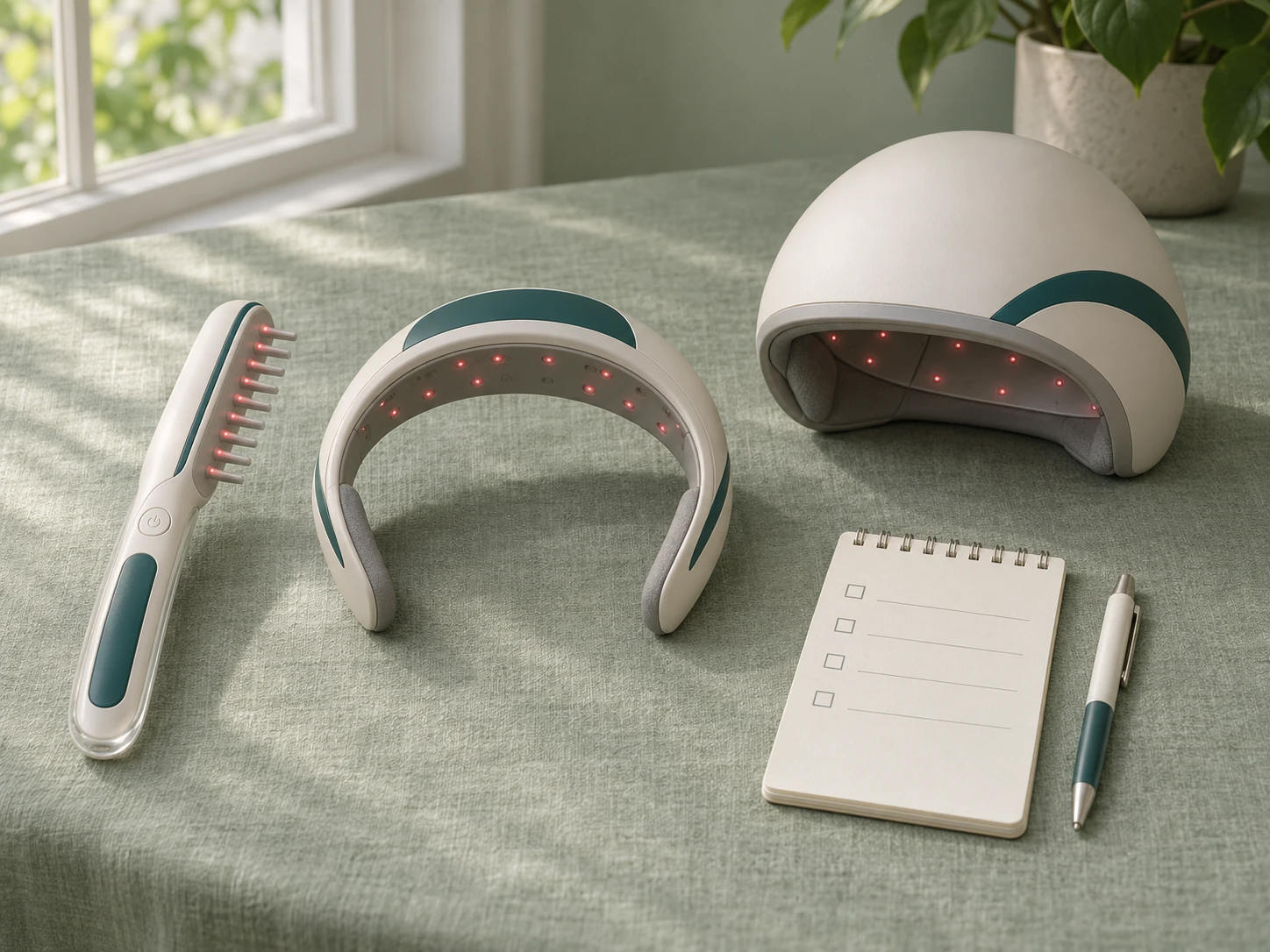
HairMax sells laser combs, bands, caps and a helmet for about $250 to $2,000. We read its trials, FDA records, manuals and return terms, and 40 recent customer reviews, to answer what its marketing skips: which models the evidence actually covers.
Editorial details
NuWays MD is independent and reader-supported. When you buy through links on our site, we may earn a commission. Learn more.
OUR TAKE
HairMax can modestly increase hair density in pattern hair loss, but the published trials tested its handheld LaserComb, not the bands, caps or helmet it promotes most. In four sham-controlled trials, comb users gained about 18 to 26 terminal hairs per square centimeter in a small test area over 26 weeks, compared with about 2 to 9 for people using look-alike devices. HairMax says the benefit lasts only while you keep using it.
For most people, we’d choose the LaserBand 82. Its 90-second sessions are the shortest HairMax sells, which we expect makes three sessions a week easier to keep up, though no study has tested that. The original LaserBand was cleared on bench tests showing the same lasers and dose rate as an earlier HairMax comb, but no band has had its own trial. The LaserBand 41 has the same evidence for about $300 less with the current code, in 3-minute sessions. For the closest match to the trials at the lowest price, choose the Ultima 9 Classic comb. Be most cautious with the $1,799 PowerFlex cap and the Lumina helmet ($1,499 with the current code), which sit furthest from the evidence.
Our HairMax picks at a glance
Best for most people goes to the model we think you are most likely to keep using, because the trial results came from three sessions a week for six months. That is our judgment, not a measured result. The LaserBand 82 has the shortest sessions; if saving about $300 with the current code matters more to you than 90 seconds a session, the LaserBand 41 has the same evidence. We don’t name a “best results” pick: no study compares HairMax’s bands, cap or helmet with its combs or with each other, and no trial shows that more lasers grow more hair. The Lumina is here for readers who want a fully hands-free helmet, but it has the least evidence behind it. The full reviews cover every model in HairMax’s laser device collection.
Brand-direct prices checked Nov 18, 2026No brand paid for placementPicked on evidence, routine and priceHow we picked
LaserBand 82 ComfortFlex
HairMax’s shortest routine, 90 seconds a session, with the same bench-test basis as the LaserBand 41.
- Rests on your head for three 30-second positions
- Original LaserBand bench-tested against a cleared HairMax comb
- About 4 hours of treatment a year
Brand-direct price
$849
HairMax US store · free gifts on Nov 18
90-second sessionsLaserBand 41 ComfortFlex
The same band design for $297 less with code BF15, in 3-minute sessions.
- Same 2014 FDA basis as the LaserBand 82
- Least expensive hands-free HairMax with the current code
- About 8 hours of treatment a year
Brand-direct price
$551.65
With code BF15 · $649 list
3-minute sessionsUltima 9 Classic LaserComb
The same lasers and 11-minute session as a comb HairMax tested, at the lowest price in its lineup.
- Same 655 nm lasers, beam count and timing as a trial comb
- Lowest-priced HairMax laser device
- Teeth part your hair so the light reaches the scalp
Brand-direct price
$211.65
With code BF15 · $249 list
11-minute sessionsLumina
Put it on and it switches off after 7 minutes, but it has the thinnest evidence of our four.
- 272 lasers in a helmet, nothing to hold or move
- Cordless and rechargeable, nothing to plug in during a session
- Costs less than the PowerFlex cap with the current code
Brand-direct price
$1,499
With code LUMI500 · $1,999 list
7-minute sessionsDoes HairMax work? What the trials actually showed
Yes, for androgenetic alopecia (pattern hair loss), with a modest effect measured over months. The best evidence is a set of four randomized, double-blind trials published together in 2014. Adults used either a HairMax LaserComb or a sham device that looked the same but shone ordinary light, three times a week for 26 weeks (Jimenez and colleagues, 2014).
| Trial group (comb vs. sham users) | Comb, 26 weeks | Sham, 26 weeks |
|---|---|---|
| Women, 9-beam43 vs. 22 users | +20.2 (+12.4%) | +2.8 (+1.8%) |
| Women, 12-beam39 vs. 18 users | +20.6 (+14.5%) | +3.0 (+1.8%) |
| Men, 7-beam24 vs. 14 users | +18.4 (+8.7%) | +1.6 (+0.7%) |
| Men, 9-beam21 vs. 22 users | +20.9 (+12.8%) | +9.4 (+5.5%) |
| Men, 12-beam22 users, same sham group | +25.7 (+17.0%) | +9.4 (+5.5%) |
Change in terminal (full-thickness) hairs per square centimeter in a small, tattooed patch of thinning scalp, counted from photographs by an evaluator who didn’t know which device each person used. Percentages are our arithmetic from each group’s starting count in the paper. Every comb group improved more than its sham group.
A hair count is a measurement, not a mirror. Subtracting what sham users gained, the combs added about 15 hairs per square centimeter on average across the four trials, roughly 7 to 13 percentage points. That can be visible to some people and hard to notice for others, and the trials didn’t measure the whole head. How participants felt is a useful check: in the women’s 9-beam trial, 36 of 43 comb users said their hair loss had improved at least minimally, against 11 of 22 sham users. In the women’s 12-beam trial (26 of 39 against 11 of 18) and the men’s trials (40 of 67 against 17 of 36), that difference in overall improvement was not statistically significant, although ratings of thickness and fullness did favor the comb significantly for the men and in the women’s 9-beam trial. In every group, about half or more of the sham users also rated their overall hair loss as improved.
An earlier HairMax trial in 110 men reached the same direction of result after 26 weeks (Leavitt and colleagues, 2009). No serious side effects were reported in any of these trials.
Who was in the trials, and who wasn’t
- Pattern hair loss only: adults roughly 25 to 60 with active thinning. Men were Norwood-Hamilton IIa to V (from early recession up to a larger crown and frontal loss), and women were Ludwig I to II or a frontal pattern.
- Lighter skin types: only Fitzpatrick skin types I to IV were enrolled, and 91% to 100% of each group was white. Two Black participants took part across all four trials.
- Device alone: nobody could have used minoxidil, finasteride, spironolactone or similar treatments in the previous 6 months. These results say nothing about adding a device to a medicine.
- Other exclusions: pregnancy or planned pregnancy, a pacemaker, defibrillator or other implanted electronic device, scalp disease or recent cancer in the treated area, a history of sensitivity to laser light, and hair shorter than half an inch or light blonde. If any of these applies to you, the results don’t describe you.
- Six months: the trials stopped at 26 weeks. The authors called for longer studies of how long the response lasts.
- Funding: Lexington International, HairMax’s maker, partly funded the research and supplied the devices and imaging equipment. Two authors disclosed fees from the company.
How HairMax compares with minoxidil and finasteride
The trial authors wrote that the hair-count gains were comparable to short-term trials of 5% minoxidil and 1 mg finasteride, but “less efficacious than longer term (≥1 year) trials” of those medicines. HairMax’s clinical page repeats the first half of that comparison, not the second. We found no trial comparing HairMax head to head with either drug. If you haven’t tried the medicines yet, our guides to finasteride vs. minoxidil and oral vs. topical minoxidil cover the options with the longer record.
What HairMax’s “90% success” and “129 new hairs” numbers mean
Both come from real study data, but each describes less than it seems to. Here is what sits behind the numbers on HairMax’s clinical research page and in its 2026 clinical summary.
- “Over 90% success rate” (93% in HairMax’s terms and manuals): the clinical summary lists, study by study, the share of device users who “showed successful new hair growth,” from 84.2% to 97.7%. It doesn’t say how large a gain counted as success or give matching figures for the sham groups, and the top figure, 97.7%, comes from an early study with no sham group in HairMax’s summary. The 2014 paper does compare a modest bar: 82% to 95% of comb users gained more than 5 hairs per cm², but so did 32% to 59% of sham users. None of these figures is the share of users who saw visibly fuller hair.
- “129 additional new hairs per sq. in.”: that equals about 20 hairs per square centimeter (one square inch is 6.45 cm²), the typical comb-group gain in the test patch above. Square inches make it sound larger; it is the same 9% to 17% gain, before subtracting what sham users gained.
- “Comparable to minoxidil and finasteride”: true only for short trials of those drugs, as explained above.
- “88%” and “100%” significant improvement: these come from a 32-patient review of office records with no control group. The 100% describes the 6 patients who used the comb alone after stopping their medicines. The paper’s own abstract rated only 8 of the 32 as significantly improved, 20 as moderately improved and 4 as unchanged (Munck and colleagues, 2014).
- “8 FDA clearances”: accurate. The FDA database lists eight HairMax clearances from 2007 to 2018. Clearance means the FDA found a device substantially equivalent to one already on the market for a stated use. It isn’t FDA approval, and the American Academy of Dermatology notes that clearance tells you nothing about how effective a device is.
- “Our most powerful hair growth device yet” (PowerFlex 272): HairMax lists the same 272 lasers and 1360 mW for the PowerFlex and the Lumina, and we found no study comparing either one with a comb or band. HairMax’s output figures also aren’t simple totals (it lists 1230 mW for both the 41- and 82-laser bands), so don’t compare them across models. More lasers treat more scalp at once; no trial shows they grow more hair.
- “1,990 clinicians, including dermatologists, share this on FrontrowMD without compensation”: HairMax product pages showed FrontrowMD counts from 1,161 to 1,990 on November 18, highest for the LaserBand 82 and PowerFlex 272. They signal professional interest in the brand, not results: the same 1,161 appears on at least three different devices, and the badges don’t say whether these professionals used a device or measured anyone’s hair.
- “7 clinical studies, 460 men and women”: HairMax says five of the seven were published. The controlled, peer-reviewed evidence is the 2009 trial and the four trials reported in 2014; the rest include an early study with no sham group.
Which HairMax models the evidence actually covers
Only the handheld combs were tested in the published trials. The LaserBands were cleared on laboratory tests showing they deliver the same lasers at the same dose rate as an earlier comb, which is a reasonable bridge but not a trial. The cap and helmet sit furthest from the evidence.
| Model and price, Nov. 18 | Each session | Link to the evidence |
|---|---|---|
| Ultima 9 Classic comb$249; $211.65 with BF15 | 11 min of combing | Matches a trial combSame 655 nm lasers, beam count and session time as a trial comb |
| Ultima 12 Classic comb$299; $254.15 with BF15 | 8 min of combing | Near a trial combSame beam count and time as a trial comb, but one wavelength instead of its two |
| Actonis 18 Dual Action comb$499; $424.15 with BF15 | 8 min of combing | No published trialIndicated for women only, per HairMax’s footer; no FDA clearance listed under its name |
| LaserBand 41$649; $551.65 with BF15 | 3 min, six positions | Bench tests onlyOriginal LaserBand cleared in 2014 on bench tests against a comb; no trial of its own |
| LaserBand 82$849, free gifts | 90 sec, three positions | Bench tests onlySame basis as the LaserBand 41; no trial of its own |
| PowerFlex 272 cap$1,799, free gifts | 7 min, hands-free | No published trialHairMax’s 2018 cap clearance used no clinical data and listed 30-minute sessions |
| Lumina helmet$1,999; $1,499 with LUMI500, plus a $75 gift card | 7 min, cordless and hands-free | No published trialNo FDA clearance listed under its name |
Prices on hairmax.com before tax, checked November 18. The codes showed no end date, and we didn’t complete a checkout. Sources: HairMax product listings and manuals, and FDA summaries K142573 and K180885.
Four things the table doesn’t show:
- Time per year. At three sessions a week, the routines add up to about 29 hours a year with the Ultima 9, 21 with the Ultima 12, 18 with the cap or helmet, 8 with the LaserBand 41 and 4 with the LaserBand 82 (our arithmetic).
- The “advanced hair loss” label. HairMax labels the cap and Lumina for “advanced hair loss” and the combs and bands for “mild to moderate” loss. We found no trial or clearance showing a better result in advanced loss, and the clearances stop at Norwood V and Ludwig II.
- Which clearance covers your model. For the Actonis 18, the PowerFlex 272, the Lumina and the current ComfortFlex bands, ask HairMax which clearance covers the exact model you buy.
- Two models we didn’t review. HairMax’s site also sells the Ultima 12 LaserComb ($399) and the Regrow MD Laser 272, a $1,199 laser liner that fits inside a baseball cap, used for 30 minutes three days a week, with a 25% restocking fee. Its page calls it “the Laser 272”, the name in HairMax’s 2018 cap clearance. Neither is in HairMax’s laser device collection.
Why the gap between the comb and the cap matters
The LaserBand’s 2014 FDA summary says HairMax supported it with bench testing: identical laser modules, verified output and the same dose rate as the comb it was based on. That makes the band the most direct hands-free link to the trials, although the current ComfortFlex versions have no separate clearance listed. It still doesn’t show that resting a band in three spots does as much as combing every section of scalp.
The cap is a different story. In its 2018 FDA summary, HairMax stated that it produced no clinical data because the cap was identical to another manufacturer’s cap, offered as a private-label product, and it listed a 30-minute treatment. HairMax now markets 7-minute sessions for its PowerFlex and Lumina, while still selling the 30-minute Regrow MD Laser 272 outside its main collection. We found no published trial or FDA summary for a 7-minute schedule, and no FDA record under the PowerFlex or Lumina names. A manufacturer can sometimes sell a modified device under an existing clearance, so ask HairMax in writing which clearance and schedule apply to the model you buy.
HairMax reviews: every model in its laser device collection
Choose the model you will realistically use three times a week for at least six months, then prefer the one closest to the evidence. A comb that sits in a drawer does nothing; a band you use every other day has the shortest bridge to the trials of any hands-free option. Here are the seven models from the table above, in our order of preference.
Our pick · Best for most people
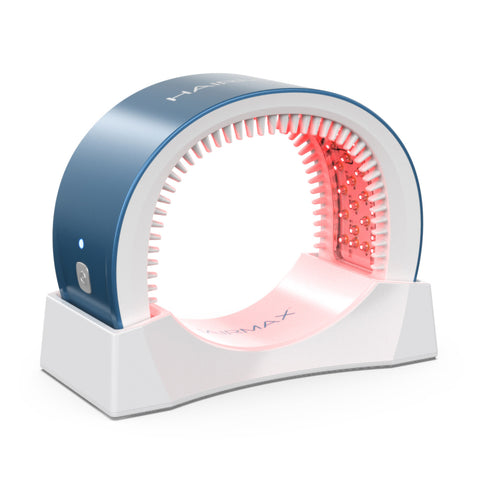
HairMax LaserBand 82 ComfortFlex
- Technology
- 82 lasers, 655 nm
- Session
- 90 seconds, 3 times a week
- Format
- Band, three positions
Why we like it
- The shortest routine HairMax sells, 90 seconds a session
- With the LaserBand 41, the closest hands-free link to the trials: the original LaserBand was bench-tested to match a cleared comb’s lasers and dose rate
- Rests on your head; no combing
Watch for
- No trial of the band itself; the ComfortFlex version has no separate clearance listed
- Costs $297 more than the LaserBand 41 with the current code, for the same evidence
- Amazon orders don’t get HairMax’s 6-month guarantee
The band rests on your scalp and vibrates every 30 seconds to tell you to slide it back to the next position. Three positions and you are done, about four hours of treatment a year. FDA cleared the original LaserBand in 2014 on bench tests showing the same laser modules and dose rate as an earlier HairMax comb. Together with the LaserBand 41, that is the most direct hands-free link to the trials of any HairMax model. The current ComfortFlex version has no separate clearance listed, so ask HairMax which one covers it.
The LaserBand 41 is the same design with half the lasers and a 3-minute session, cleared in the same 2014 filing. With the Black Friday code it costs $297 less than the 82. Neither band has been tested in its own trial, so we would not pay extra expecting better hair, only a shorter routine.
Our pick · Best value
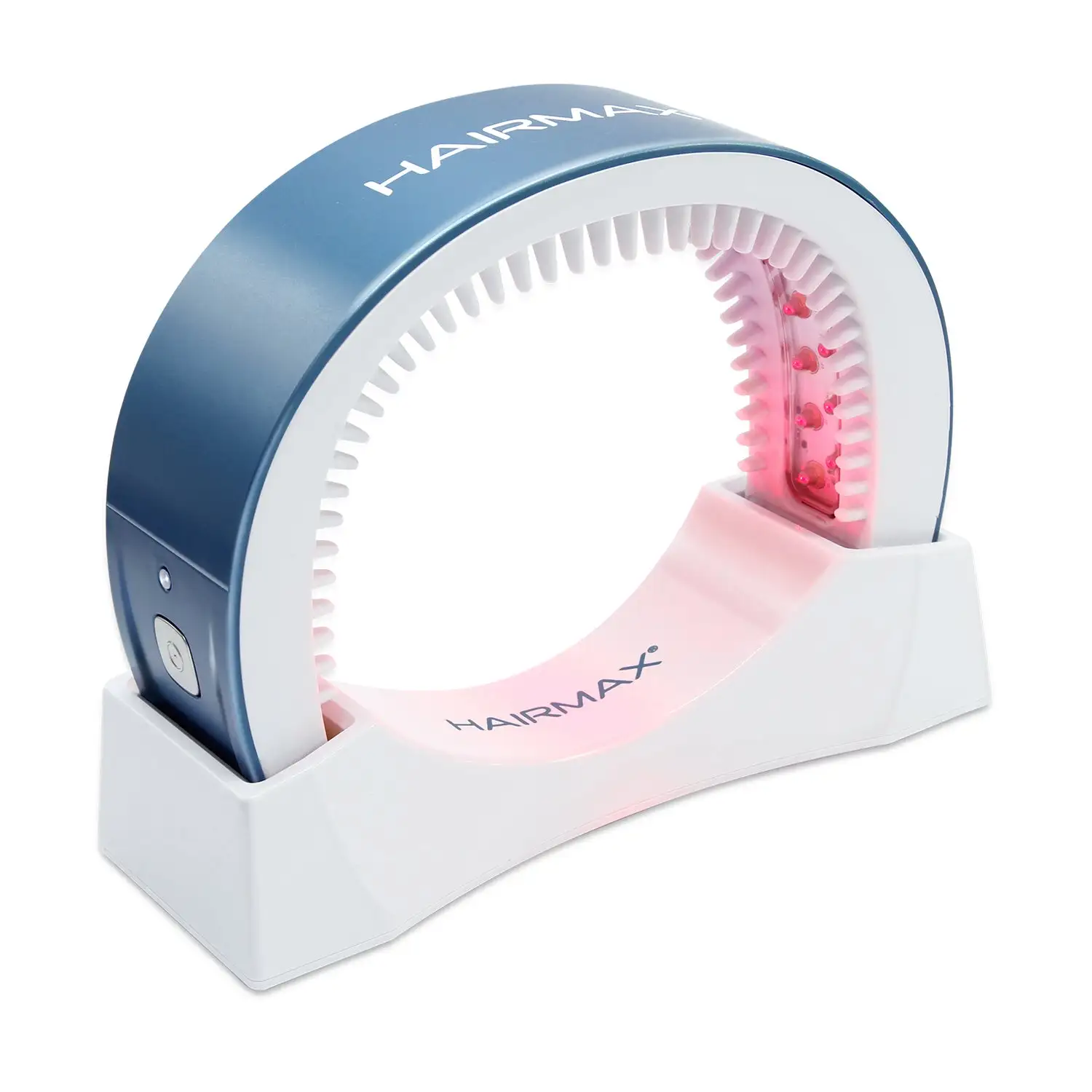
HairMax LaserBand 41 ComfortFlex
- Technology
- 41 lasers, 655 nm
- Session
- 3 minutes, 3 times a week
- Format
- Band, six positions
Why we like it
- Same design and 2014 FDA basis as the LaserBand 82, for $297 less with code BF15
- About 8 hours of treatment a year
- Rests on your head; no combing
Watch for
- No trial of the band itself; the ComfortFlex version has no separate clearance listed
- Sessions take twice as long as the LaserBand 82
- A return costs $110.33 (20%) plus shipping
The LaserBand 41 is the LaserBand 82 with half the lasers, so HairMax has you use it in six 30-second positions (3 minutes) instead of three (90 seconds). Both were cleared in the same 2014 FDA filing on bench tests against an earlier HairMax comb, though that filing described three positions for both bands. HairMax lists the same full-scalp coverage for both.
At $551.65 with code BF15, it is the least expensive hands-free HairMax. That is why it is our value pick: you give up about 90 seconds per session and save about $300.
Our pick · Closest to the trials
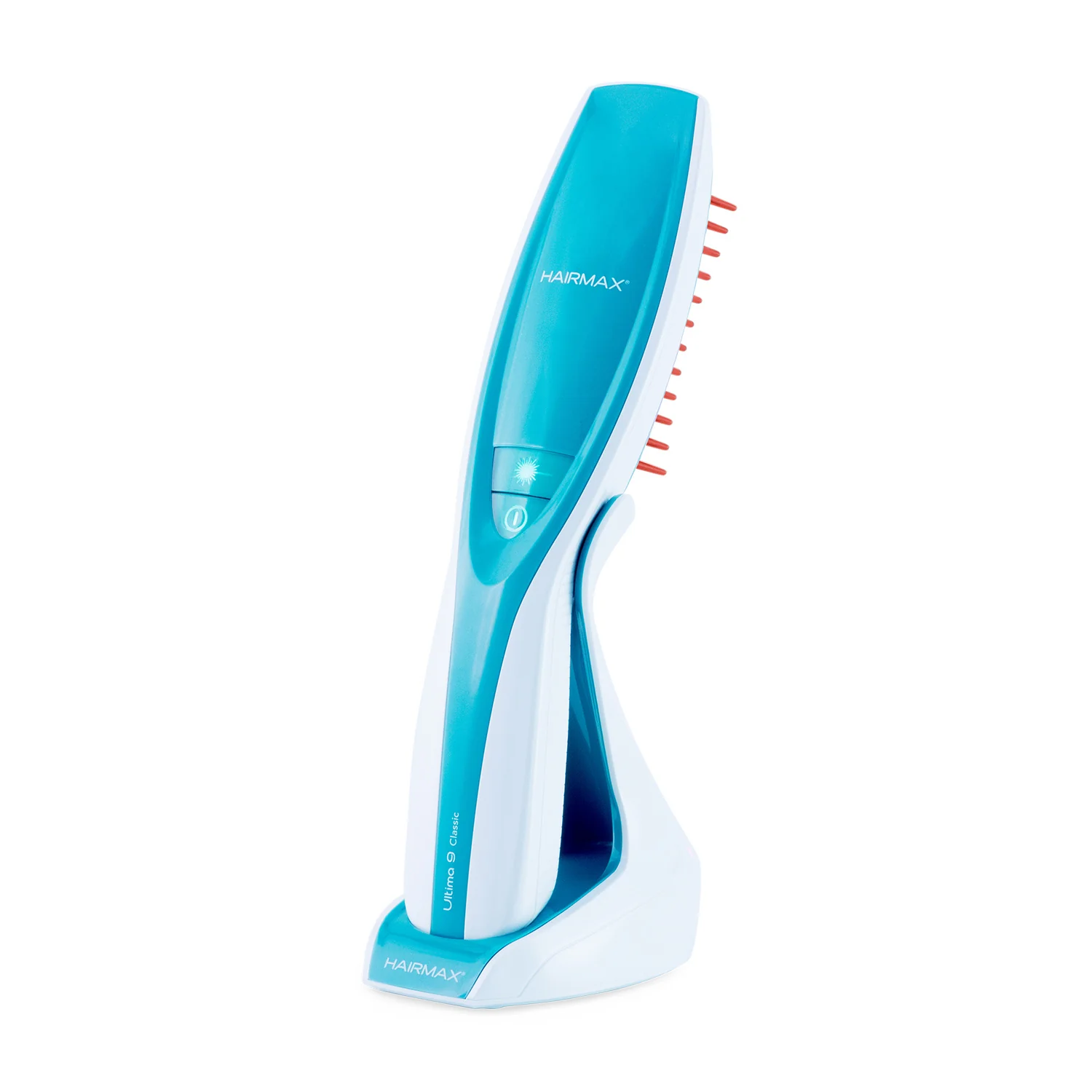
HairMax Ultima 9 Classic LaserComb
- Technology
- 9 lasers, 655 nm
- Session
- 11 minutes, 3 times a week
- Format
- Handheld comb
Why we like it
- The closest match to the published trials: same lasers, beam count and session time
- The lowest price of any HairMax laser device
- Treats the whole scalp, as the trial combs did
Watch for
- About 29 hours of combing a year at three sessions a week
- Trial results were measured at 26 weeks; plan on six months
- Not cleared for skin types V and VI
This is the closest match to what HairMax actually tested: a handheld comb with nine 655 nm lasers and an 11-minute session, the same as the 9-beam comb in the 2014 trials. You move it slowly through your hair, pausing at each section so the teeth part the hair and the light reaches your scalp.
The trade-off is time: about 29 hours of combing a year at three sessions a week. The Ultima 12 Classic ($299, or $254.15 with the code) cuts each session to 8 minutes. It has one wavelength where the trial’s 12-beam comb had two, though the trial authors found results didn’t depend on which comb model was used. If you won’t keep up with combing, a band costs more but takes minutes.
For shorter comb sessions
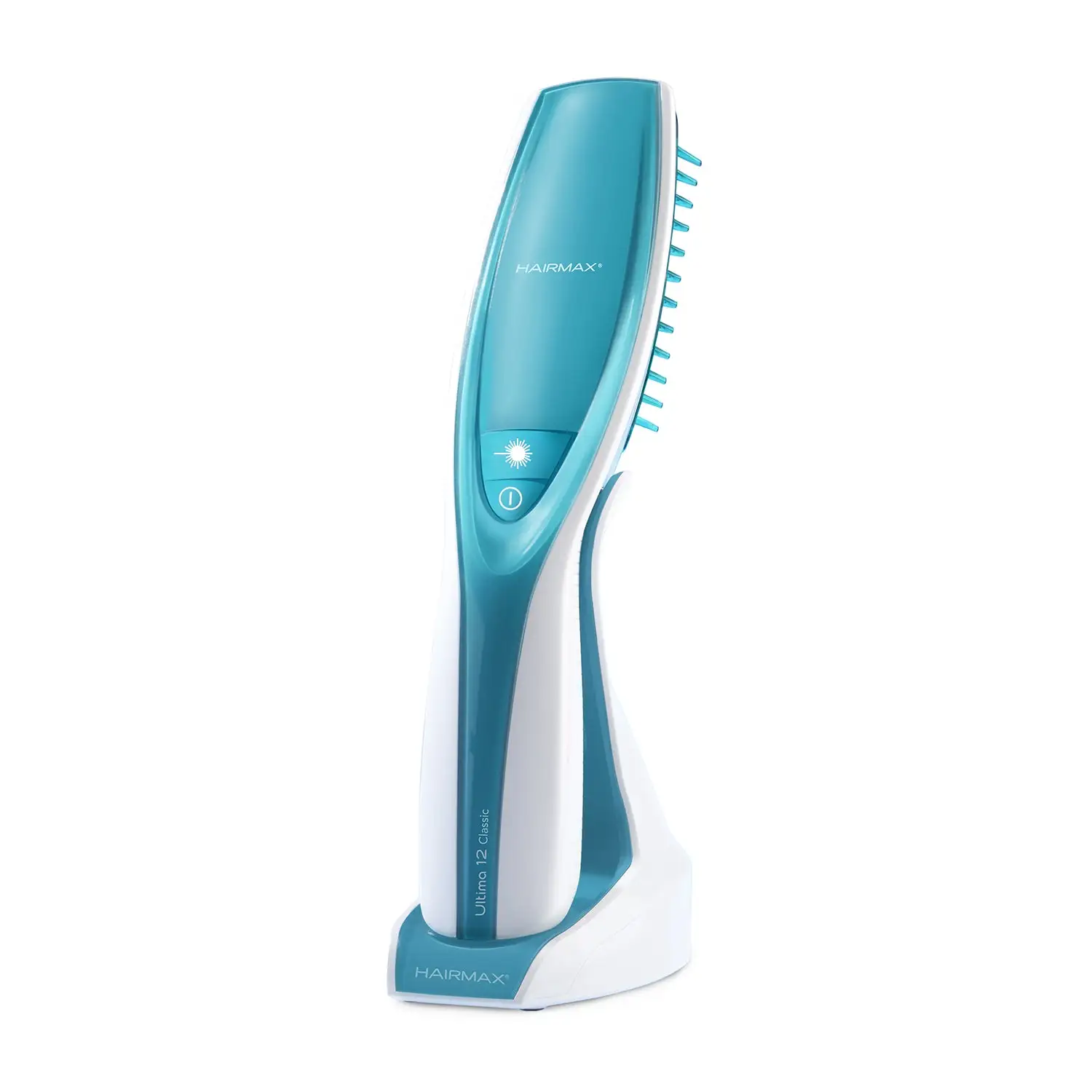
HairMax Ultima 12 Classic LaserComb
- Technology
- 12 lasers, 655 nm
- Session
- 8 minutes, 3 times a week
- Format
- Handheld comb
Why we like it
- Cuts each session to 8 minutes, about 21 hours a year
- Same beam count and session time as the 12-beam trial comb
- The second-lowest price in the lineup
Watch for
- One 655 nm wavelength where the 12-beam trial comb used two
- Still handheld combing, three times a week
- Costs $42.50 more than the Ultima 9 with the current codes
The Ultima 12 Classic saves three minutes per session over the Ultima 9 for $42.50 more at the current code prices. Its 12 lasers and 8-minute session match the 12-beam comb in the 2014 trials, but that comb used two wavelengths (635 and 655 nm) and the Ultima 12 Classic lists one. The trial authors found results didn’t depend on which comb model was used, so we don’t treat the difference as decisive.
Labeled for women only
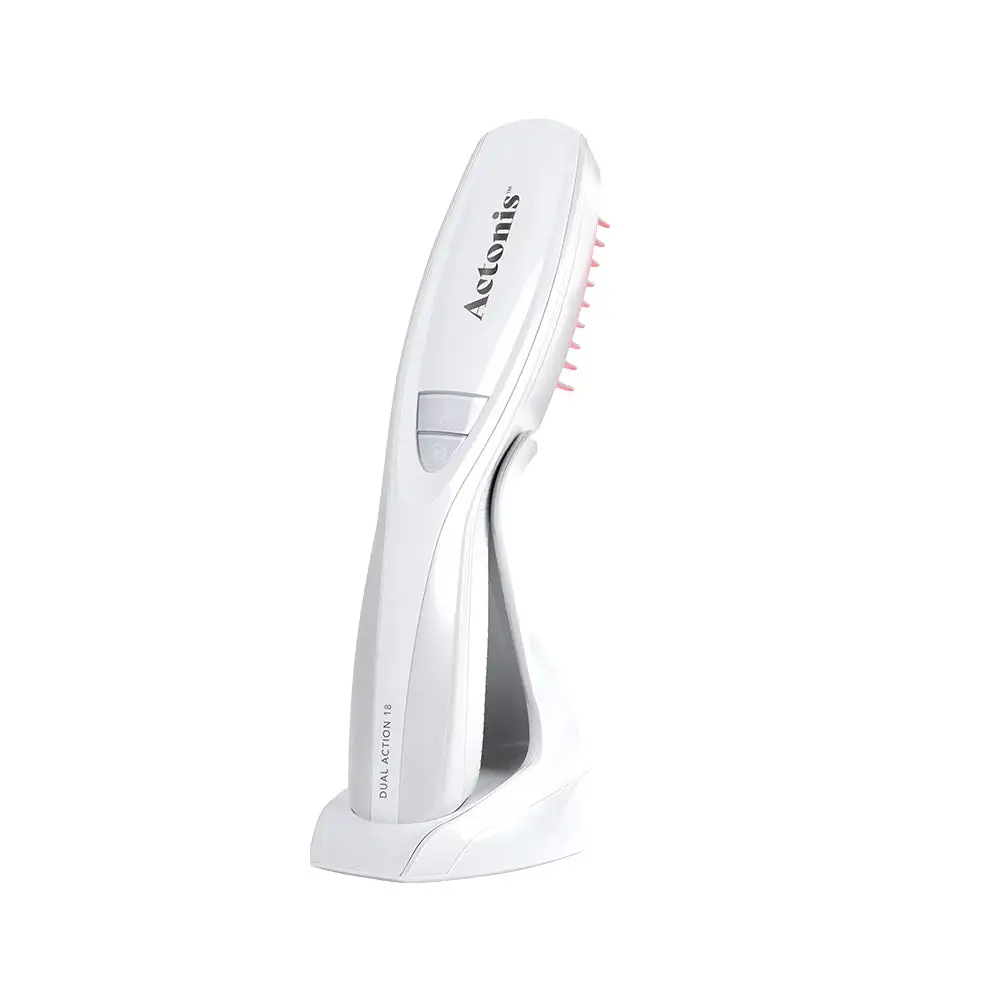
HairMax Actonis 18 Dual Action LaserComb
- Technology
- 18 lasers, 655 + 635 nm
- Session
- 8 minutes, 3 times a week
- Format
- Handheld comb
Why we like it
- Two wavelengths, like the 12-beam comb in the trials
- 18 lasers in an 8-minute session
- Hair-parting teeth, like HairMax’s other combs
Watch for
- HairMax’s stated indication (site footer) covers women only, though its product page markets it to men too
- Not in any published trial, and no FDA clearance listed under its name
- Costs $170 more than the Ultima 12 Classic with the current codes
HairMax launched the Actonis 18 in 2024 with two wavelengths. The indication in HairMax’s site footer covers women only, although the product page says it is for women and men, so men should choose another model. Its pages advertise a “97% success rate,” but this comb wasn’t in any of the published trials, and we found no FDA clearance listed under its name. A woman who prefers a comb can get closer to what was actually tested with the Ultima 9 or Ultima 12 Classic, for $170 to $212.50 less with the current codes.
Hands-free · Cordless helmet
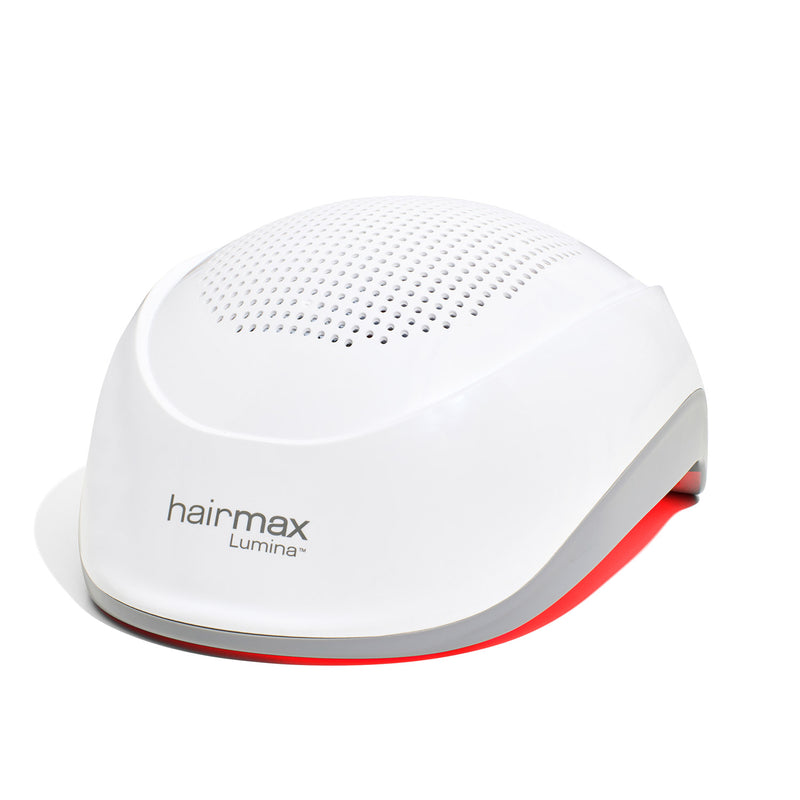
HairMax Lumina
- Technology
- 272 lasers, 650–655 nm
- Session
- 7 minutes, 3 times a week
- Format
- Cordless helmet
Why we like it
- Nothing to hold or move: put it on and it stops after 7 minutes
- Cordless and rechargeable, nothing to plug in during a session
- Costs less than the PowerFlex cap with the current code
Watch for
- No trial or FDA clearance listed under its name; its manual cites comb studies
- Battery rated for at least 300 charging cycles and may need replacing
- Confirm in writing that the 6-month guarantee covers the helmet
The Lumina is a 272-laser helmet with a built-in battery: put it on, and it switches off after 7 minutes. It is the most convenient HairMax and, at the Black Friday price, cheaper than the PowerFlex cap.
It is also furthest from the evidence. HairMax launched it in 2025, we found no FDA clearance listed under its name, and its manual cites clinical studies that tested combs. HairMax designs it to last up to 10 years, but the manual says the battery is rated for at least 300 charging cycles and may need replacing by HairMax. If every session used a full cycle, that could be as little as about two years at three sessions a week. Ask HairMax how many sessions one charge covers and what a replacement costs, since the warranty excludes normal wear and tear. Buy it from hairmax.com so the return option applies, and ask HairMax in writing which clearance covers it.
HairMax’s “most powerful” cap
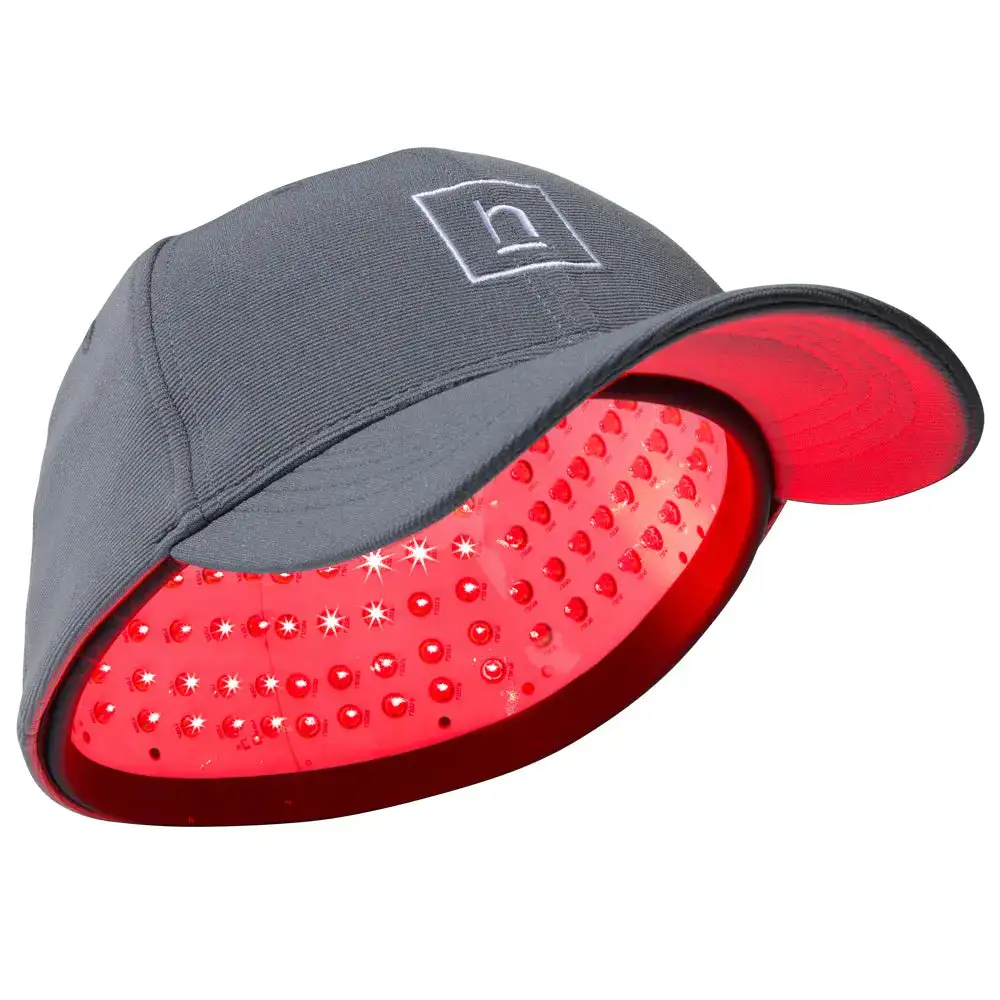
HairMax PowerFlex 272 Laser Cap
- Technology
- 272 lasers, 650–655 nm
- Session
- 7 minutes, 3 times a week
- Format
- Cap with controller
Why we like it
- Covers the top of the head with nothing to hold or move
- Hands-free and mobile: HairMax suggests using it while you work or read
- 272 lasers, tied with the Lumina for the most in the lineup
Watch for
- No FDA record under its name; HairMax’s 2018 cap clearance used no clinical data and 30-minute sessions
- $300 more than the Lumina with the current code, with the same listed lasers and output
- 4 of the 40 recent reviews we read described a failed HairMax cap, power pack or controller (models not named)
HairMax calls the PowerFlex 272 its “most powerful hair growth device yet.” Its listed specifications, 272 lasers and 1360 mW, are the same as the Lumina’s, and no study compares either one with the combs or bands that were tested. HairMax’s 2018 FDA summary for its Laser 272 cap says it submitted no clinical data because the cap was identical to another manufacturer’s cap, and it listed 30-minute sessions. We found no FDA record under the PowerFlex name, and HairMax now markets 7 minutes.
At list price the PowerFlex costs $200 less than the Lumina, but with the current LUMI500 code the Lumina is $300 cheaper. We would choose the PowerFlex only if you prefer its cap shape or it goes on sale. HairMax also sells the Regrow MD Laser 272, a $1,199 laser liner for a baseball cap, outside its main device collection. Its page uses the “Laser 272” name and the 30-minute schedule from that 2018 clearance; we didn’t review it.
Does HairMax have side effects?
Mild ones, in a small share of users, and no serious side effects were reported in the trials. Among LaserComb users, the 2014 trials recorded device-related dry skin (5.1%), itching (2.5%), scalp tenderness (1.3%), irritation (1.3%) and a warm feeling (1.3%). None of these made anyone stop treatment.
- Test your skin first: the manuals tell you to shine the lasers on your forearm for 2 minutes before the first treatment. If redness or a rash appears, don’t use it and contact HairMax.
- Medicines that increase light sensitivity: the Lumina manual lists some cold, allergy and pain medicines and drugs for infections as examples. Do the skin test if you take any, and ask your pharmacist if you aren’t sure.
- Eyes: don’t look into the lasers or at their reflection in a mirror.
- Pregnancy and implanted devices: the trials excluded pregnant women and people with a pacemaker, defibrillator or other implanted electronic device, so safety wasn’t studied in those groups. Ask your doctor first.
- Light-sensitive conditions: the American Academy of Dermatology notes that conditions such as lupus can worsen with red light. See a dermatologist first if you have one.
- Skin types V and VI: HairMax’s clearances cover skin types I to IV only, so deeply pigmented brown or black skin falls outside what was studied and cleared. The AAD notes that darker skin is more sensitive to visible light, which can leave dark spots, and advises talking with a dermatologist before using a red-light device.
Is it okay to use HairMax every day?
No. The manuals call for three sessions a week on alternate days, such as Monday, Wednesday and Friday, and tell you not to exceed the treatment time. The trials used that schedule, and we found no evidence that daily use adds anything.
What HairMax customers report
Recent reviews mostly praise HairMax’s phone support. Only 11 of the 40 most recent describe an actual hair result. On Trustpilot, HairMax had 432 reviews and a 4.3 score on November 18, with 68% five-star and 17% one-star reviews.
We read and coded the 40 most recent reviews (May 12 to November 18, 2026):
| What the review described | Reviews of 40 | Details |
|---|---|---|
| A hair result after use | 11 | 8 positive, 2 no change or worse (one after two years with a $2,000 device), 1 undecided after 6 months |
| Too early to judge | 8 | Just started, or not yet using the device |
| A device failure or repair | 5 | 4 named a cap: a power pack, a controller, a cap that wouldn’t turn on, or a warranty replacement |
| An order, delivery or refund problem | 3 | Plus 1 complaint about price increases |
| Mainly customer service | About half | Often naming a staff member |
A review can count in more than one row; one reviewer, for example, reported both a good result and a cap that later stopped working.
On Amazon, when we checked on November 18, the LaserBand 82 listing averaged 3.8 out of 5 from 163 ratings and the Ultima 12 LaserComb listing 4.0 from 83 reviews (we couldn’t confirm whether that listing is the Classic model). Those are middling scores, and a fair reminder of what the trials found: hair counts rose on average, but results differed widely from person to person.
Reviews like these are self-reported, record nothing about other treatments, and come from people motivated to write. Trustpilot also rates the company rather than a specific device. Read them for practical patterns, such as cap battery and controller problems and good warranty help, not as proof of how much hair a device grows.
HairMax cost, returns and warranty
If you keep the device and it keeps working, the price you pay is the cost. If you return it, HairMax keeps 20% of the device price and you pay to ship it back. The 6-month money-back guarantee applies only to devices bought on hairmax.com.
| Model, price paid Nov. 18 | Paid | 20% fee | Refund |
|---|---|---|---|
| Ultima 9 Classicwith code BF15 | $211.65 | $42.33 | $169.32 |
| Ultima 12 Classicwith code BF15 | $254.15 | $50.83 | $203.32 |
| Actonis 18with code BF15 | $424.15 | $84.83 | $339.32 |
| LaserBand 41with code BF15 | $551.65 | $110.33 | $441.32 |
| LaserBand 82 | $849.00 | $169.80 | $679.20 |
| Luminawith code LUMI500 | $1,499.00 | $299.80 | $1,199.20 |
| PowerFlex 272 | $1,799.00 | $359.80 | $1,439.20 |
Refund before return shipping. Assumes the fee applies to the price you paid; HairMax’s terms say “total purchase price of the device.” Return shipping isn’t refunded, HairMax asks you to insure the parcel for its full value, and original shipping isn’t refunded either.
The fine print that changes the decision:
- Where you buy: Amazon and other retailers follow their own return policies, not HairMax’s guarantee.
- When the 6 months start: HairMax’s returns page counts from the date of purchase, but its terms count from delivery. Plan on the purchase date, or get the date confirmed in writing.
- How to return: call for a return authorization, then ship within 10 days of receiving it. The device must be in as-new condition with the complete kit.
- Payment plans: the 20% fee is charged on the full device price, not on what you have paid so far.
- The helmet: HairMax’s returns page says the guarantee covers all its laser devices, but its terms list only combs, bands and caps, so get it in writing that the Lumina is covered.
- Free gifts and gift cards: HairMax’s returns page says you may keep hair care products from a special bundle offer if you return the device, but it doesn’t say whether that covers free-gift promotions or the Lumina’s $75 gift card. Ask before you buy.
- Changes: HairMax says it can amend or end the guarantee without notice, so save a copy of the terms on the day you buy.
Warranty and repairs
Every device has a 1-year limited warranty, counted from purchase or delivery, whichever is later. It covers buyers in the United States who bought from HairMax or an authorized seller, and HairMax may reject claims for devices from unauthorized sellers. After the first year, repairs cost $75 for a comb, $120 for a band and $150 for a cap or helmet, plus shipping. HairMax says parts and repairs stay available for up to 10 years after a model is discontinued. It designs both the LaserBand 82 and the Lumina to last up to 10 years of regular use, but says the Lumina’s battery is rated for at least 300 charging cycles and may need replacing by HairMax.
HairMax labels its devices FSA and HSA eligible. Confirm with your plan administrator before counting on it.
When to skip HairMax
A HairMax device is a poor buy in these situations, whatever the price.
- It may not be pattern hair loss. Patchy bald spots, sudden heavy shedding, a sore, red or scaly scalp, or hair loss with other symptoms needs an examination first, because the cause decides the treatment. See telogen effluvium, hair thinning in women and hair loss in men.
- Your skin is type V or VI. Deeply pigmented brown or black skin is outside HairMax’s cleared range and wasn’t studied; see safety.
- You are pregnant or have an implanted electronic device. Neither group was studied. Ask your doctor first.
- The area is already bald. The clearances stop at Norwood V and Ludwig II, and the trials measured thinning areas, not bare scalp.
- You can’t keep a routine for six months. The trials measured results at 26 weeks, and HairMax says the benefit lasts only while you keep using it.
- You want the strongest evidence first. Minoxidil and finasteride have the longer record; see the alternatives below.
HairMax vs. iRestore, minoxidil and finasteride
We found no trial comparing HairMax head to head with iRestore or with the hair-loss medicines. Here is how to think about each choice.
- iRestore: the useful differences are the routine, price and return terms, not proven regrowth. Our HairMax vs. iRestore comparison lines up the models.
- Minoxidil and finasteride: they have the longer evidence record, as the trial authors noted. Minoxidil costs far less up front but is a daily habit for as long as you want the result; see minoxidil costs.
- Combining a device with medicine: common in practice, but the HairMax trials excluded medicine users. The only published HairMax study of combined use was the 32-patient records review described above, so nobody can tell you how much a device adds to minoxidil or finasteride.
- Other light devices: our guide to red light therapy for hair loss covers the wider evidence and who it suits.
HairMax questions, answered
How long does HairMax take to work?
Think in months. The trials measured hair counts at 16 and 26 weeks, and HairMax’s manuals say most users see benefits “in as little as 16 weeks.” Give it six months on schedule before judging, and photograph the same area in the same light every month so you are comparing like with like.
Do the results last if you stop?
HairMax says ongoing treatment is needed to keep any benefit. The trials didn’t follow people after they stopped, so plan on using the device for as long as you want the result.
Is HairMax FDA approved?
No. HairMax devices are FDA cleared, which is a different process. Clearance means the FDA found a device substantially equivalent to one already on the market for a stated use. Eight HairMax clearances are listed, the latest from 2018; we found none listed under the PowerFlex, Lumina or Actonis names.
Does HairMax work for women?
It can. Two of the four 2014 trials enrolled women with Ludwig I to II or frontal thinning, and both comb groups gained more hair than their sham groups. HairMax’s stated indication for one model, the Actonis 18 comb, covers women only, although its product page also markets it to men. Women’s hair loss has several causes, so confirm it is pattern hair loss first; see hair thinning in women.
Can HairMax regrow a bald spot or a receding hairline?
It is cleared for men up to Norwood V and women up to Ludwig II, not for extensive baldness. The trials measured areas that were thinning, not bare scalp. Expect thicker coverage where hair is still growing, not a restored hairline.
Which HairMax model is best?
For most people, we’d choose the LaserBand 82, because its 90-second sessions are the shortest HairMax sells. The LaserBand 41 is the same design for about $300 less with the current code, and the Ultima 9 Classic comb is the closest match to the published trials at the lowest price. No study compares the bands, cap or helmet with the combs, and the 2014 trials, including one that randomized two comb models, found results didn’t depend on which comb was used. So no model has been shown to grow the most hair. See our picks.
Is HairMax worth it?
It can be if you have pattern hair loss, a skin type the device is cleared for, realistic expectations and a model you will use. It is weaker value if you are hoping for a dramatic change, prefer a hands-free cap, or haven’t considered minoxidil or finasteride. Buying on hairmax.com keeps the 6-month return option, minus the 20% fee.
Should I buy HairMax on Amazon?
Only if the Amazon seller’s return policy works for you. HairMax’s money-back guarantee covers hairmax.com purchases only, and its warranty applies to authorized sellers. Check that the listing is sold by HairMax or an authorized seller.
Sources and editorial notes
Prepared for U.S. readers. NuWays MD read HairMax’s product listings, terms, warranty and return pages, its February 2026 clinical summary, the Lumina manual and LaserBand 82 quick start guide, the published trials and the FDA’s 510(k) records on November 18, 2026. We coded the 40 most recent Trustpilot reviews the same day. We have not tested any device, measured hair growth or evaluated comfort. Clinical review is pending.
Clinical evidence comes from the peer-reviewed papers; manufacturer documents identify products, schedules and terms and are not independent proof of results. Percentages from starting hair counts, hours a year and refund amounts are our own arithmetic, shown so you can check them. Black Friday prices change; check the current price before buying.
See our editorial approach and commercial disclosures. Report a correction through Contact.
View all 15 sources
- Jimenez and colleagues, American Journal of Clinical Dermatology, 2014. Four randomized, double-blind, sham-controlled trials of 7-, 9- and 12-beam LaserCombs in 269 randomized adults (225 analyzed) for 26 weeks. Source of the hair-count, self-assessment, side effect, population, exclusion and funding details. Partly funded by HairMax’s maker.
- Leavitt and colleagues, Clinical Drug Investigation, 2009. Randomized, sham-controlled trial of a 9-beam LaserComb in men; 110 completed 26 weeks. A HairMax co-founder is a co-author. Abstract read.
- Munck and colleagues, International Journal of Trichology, 2014. Retrospective review of 32 patients using the LaserComb alone or with minoxidil or finasteride; no control group. One author consults for HairMax’s maker.
- HairMax clinical research page and its linked February 2026 clinical summary. Source of the “90% success,” “129 hairs per square inch,” seven-study and indication claims we explain; manufacturer material.
- FDA 510(k) summary K142573 (2014). Clearance of the 41- and 82-laser bands, originally named LaserComb 41 and 82, based on bench testing against an earlier comb; indications limited to skin types I to IV.
- FDA 510(k) summary K180885 (2018). Clearance of the HairMax Laser 272, 202 and 80 caps with no clinical data, as identical private-label versions of another manufacturer’s cap; lists 30-minute treatments.
- FDA 510(k) premarket notification database. Lists eight HairMax (Lexington International) clearances from 2007 to 2018 under product code OAP; searched November 18, 2026.
- HairMax laser device listings, product pages and home page. Prices, laser counts, session times, wavelengths (Ultima 9 and 12 Classic: 655 nm), the “advanced” and “mild to moderate” labels, the PowerFlex 272 “most powerful” claim, the FrontrowMD counts shown on each product page, Black Friday codes (BF15, LUMI500) and the site footer’s per-product clearance statements (Actonis 18 for women only), checked November 18, 2026.
- HairMax warranty, guarantee and returns page. 6-month guarantee for hairmax.com purchases, 20% fee, return shipping, repair fees and parts availability.
- HairMax terms and conditions. Guarantee counted from delivery, fee on the total device price including payment plans, return conditions and the 10-day shipping deadline.
- HairMax limited warranty. One-year coverage for U.S. purchases from HairMax or authorized sellers, exclusions and claim process.
- HairMax manuals and quick start guides. Lumina manual (schedule, skin test, light-sensitivity cautions, eye safety, 10-year design life, battery rated for at least 300 charging cycles that may need replacing) and LaserBand 82 quick start guide (three 30-second positions, 10-year design life).
- HairMax on Trustpilot. 432 reviews and a 4.3 score on November 18, 2026; we coded the 40 most recent. Company-level, self-reported reviews.
- Amazon listings for the HairMax LaserBand 82 and Ultima 12 LaserComb. Average star ratings and counts read by NuWays MD on November 18, 2026; they change over time and describe the listing, not a verified purchase or result.
- American Academy of Dermatology: red light therapy. Independent overview of what red light therapy can and can’t do and safety precautions.